Employee Recognition in 2026: What the Evidence Supports
Good recognition makes a contribution visible. Here is what current research can tell us, what it cannot promise, and how to turn appreciation into a useful record of real work.
Practical guides and honest research on recognition, awards, and the work worth celebrating, written for managers, People teams, and everyone who wants great work noticed.

Good recognition makes a contribution visible. Here is what current research can tell us, what it cannot promise, and how to turn appreciation into a useful record of real work.

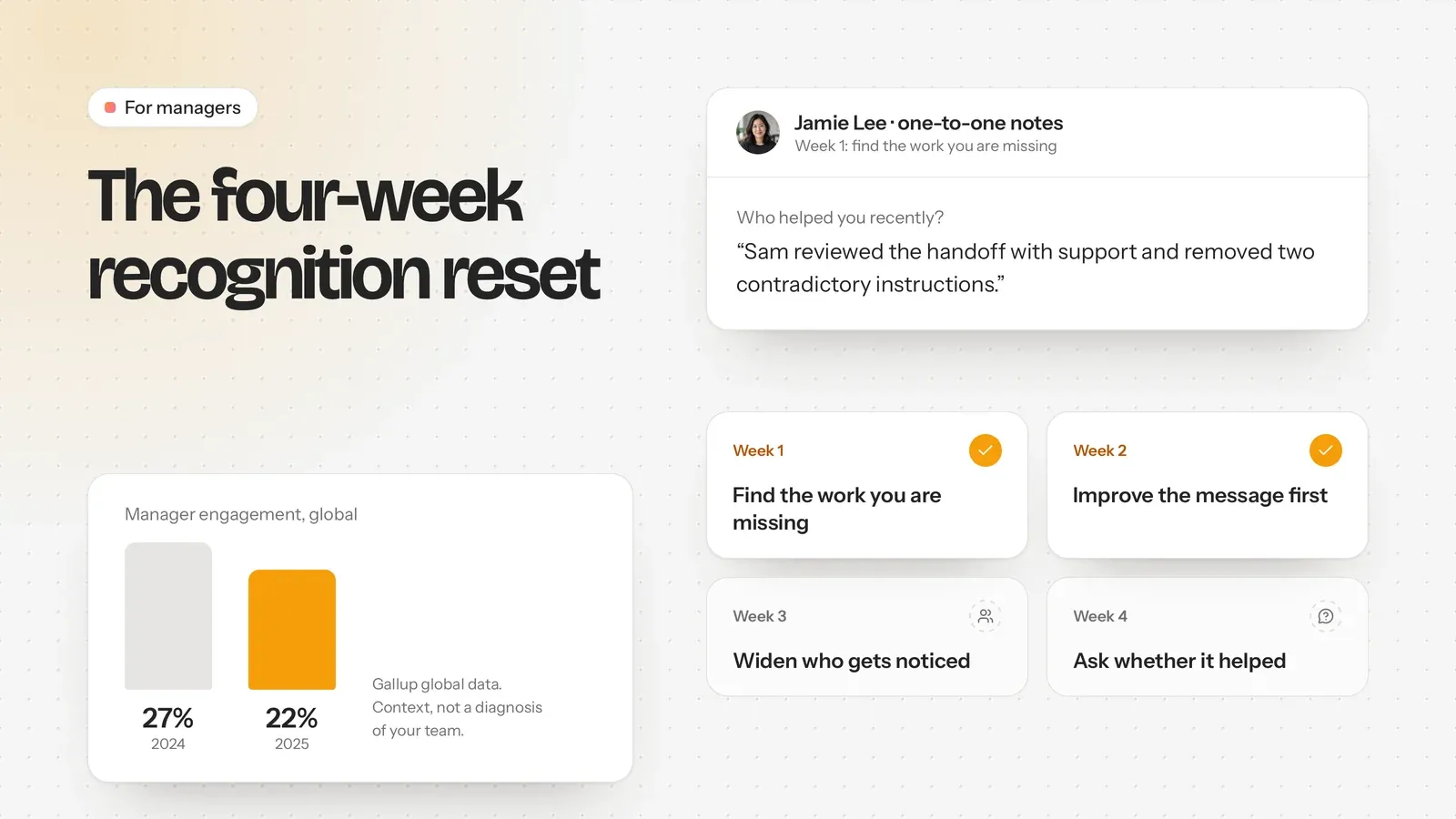
The latest Gallup findings make a case for closer attention to managers. A practical, four-week reset helps teams notice good work without adding another empty reporting ritual.

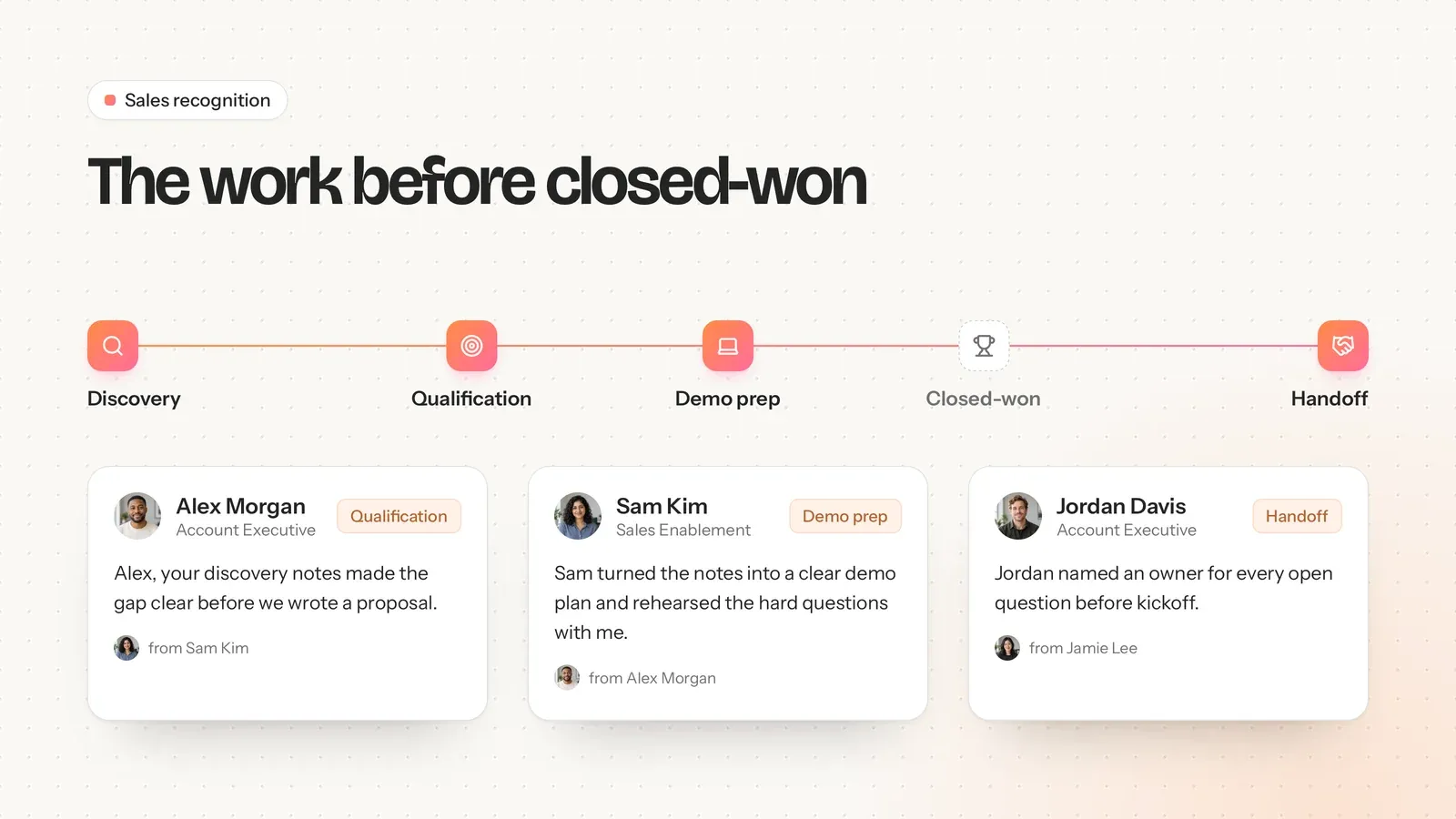
The gong marks a result. Recognition can also explain the judgment, preparation, and teamwork that made the result possible—with examples for real sales teams.

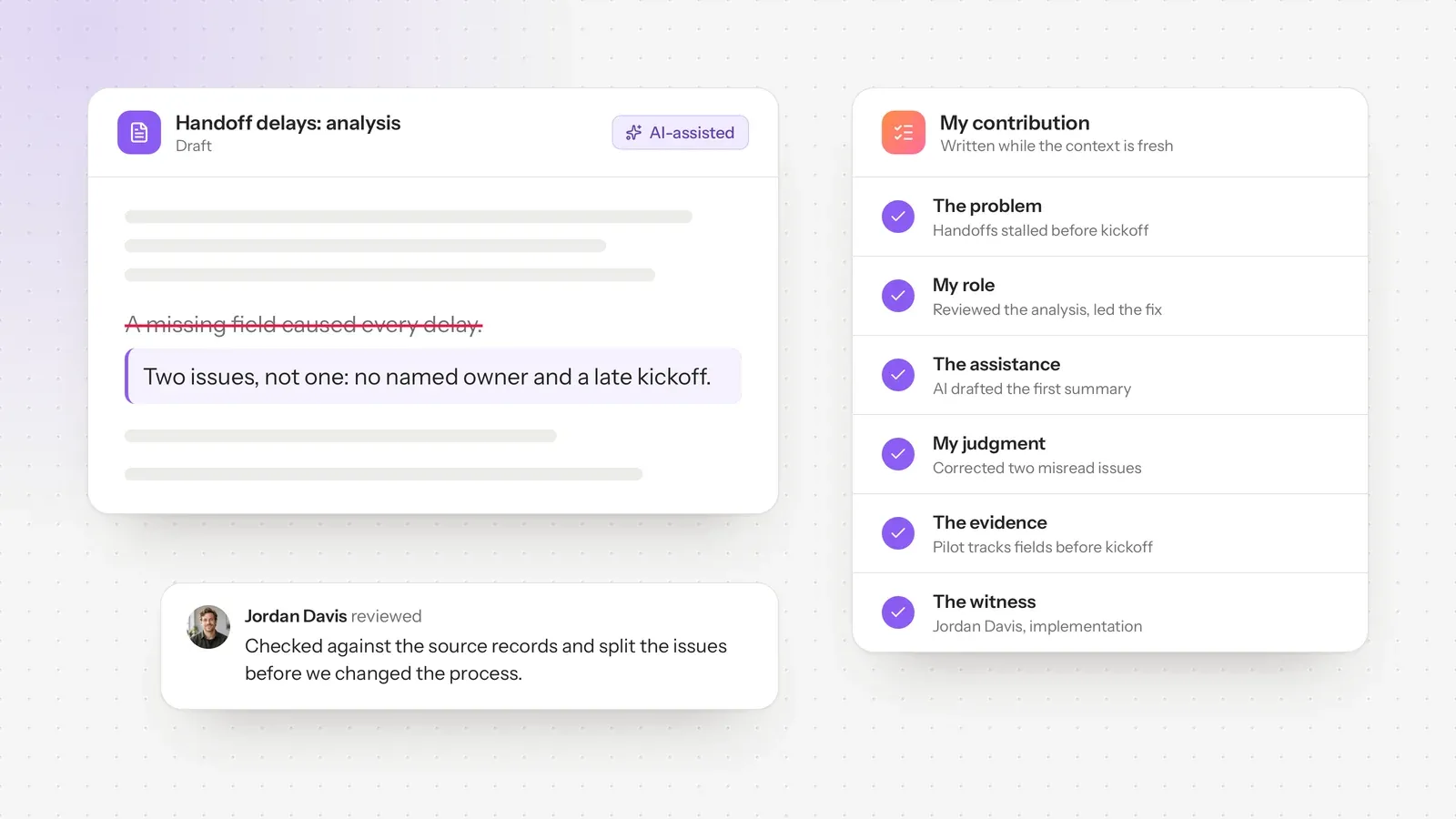
A polished output does not explain the decisions behind it. Build a credible account of your judgment, checks, collaboration, and results without overstating what you did.

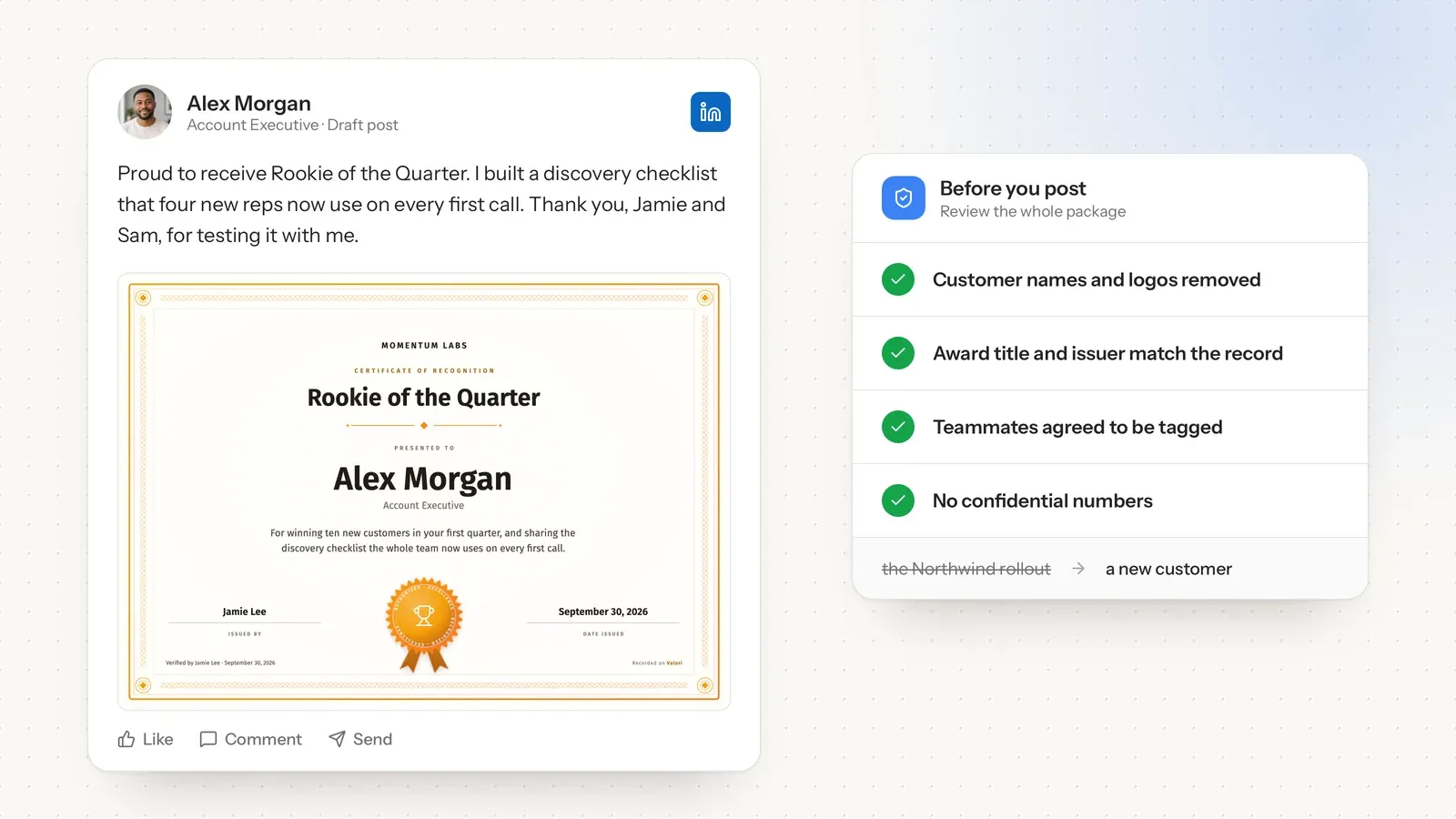
A useful award post explains the work, credits the people, and protects information that was never meant to be public. A practical review from first draft to shared record.

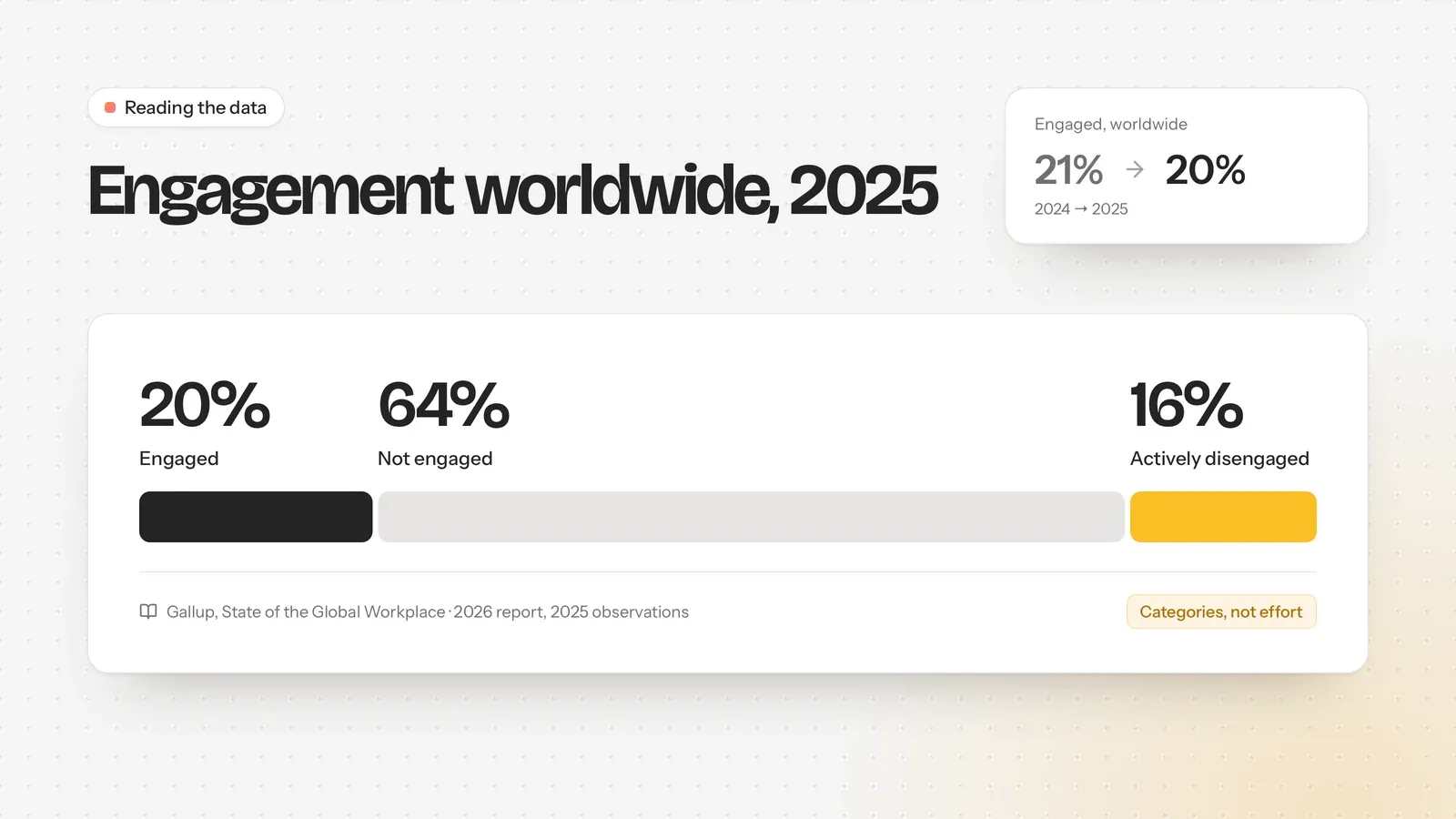
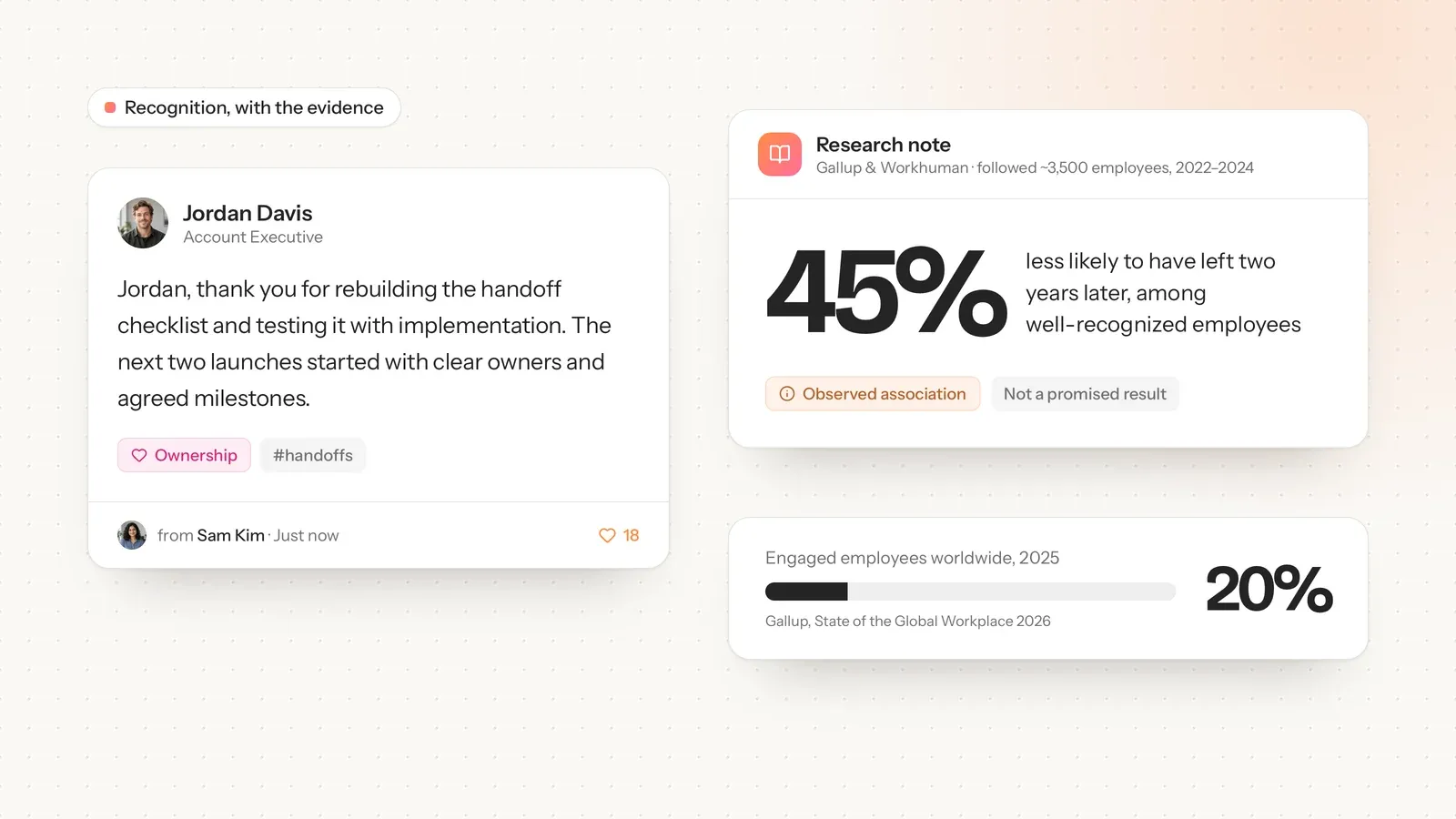
The latest Gallup report covers work in 2025. Read its global engagement figures with the right dates, population, and limits before applying them to a recognition program.

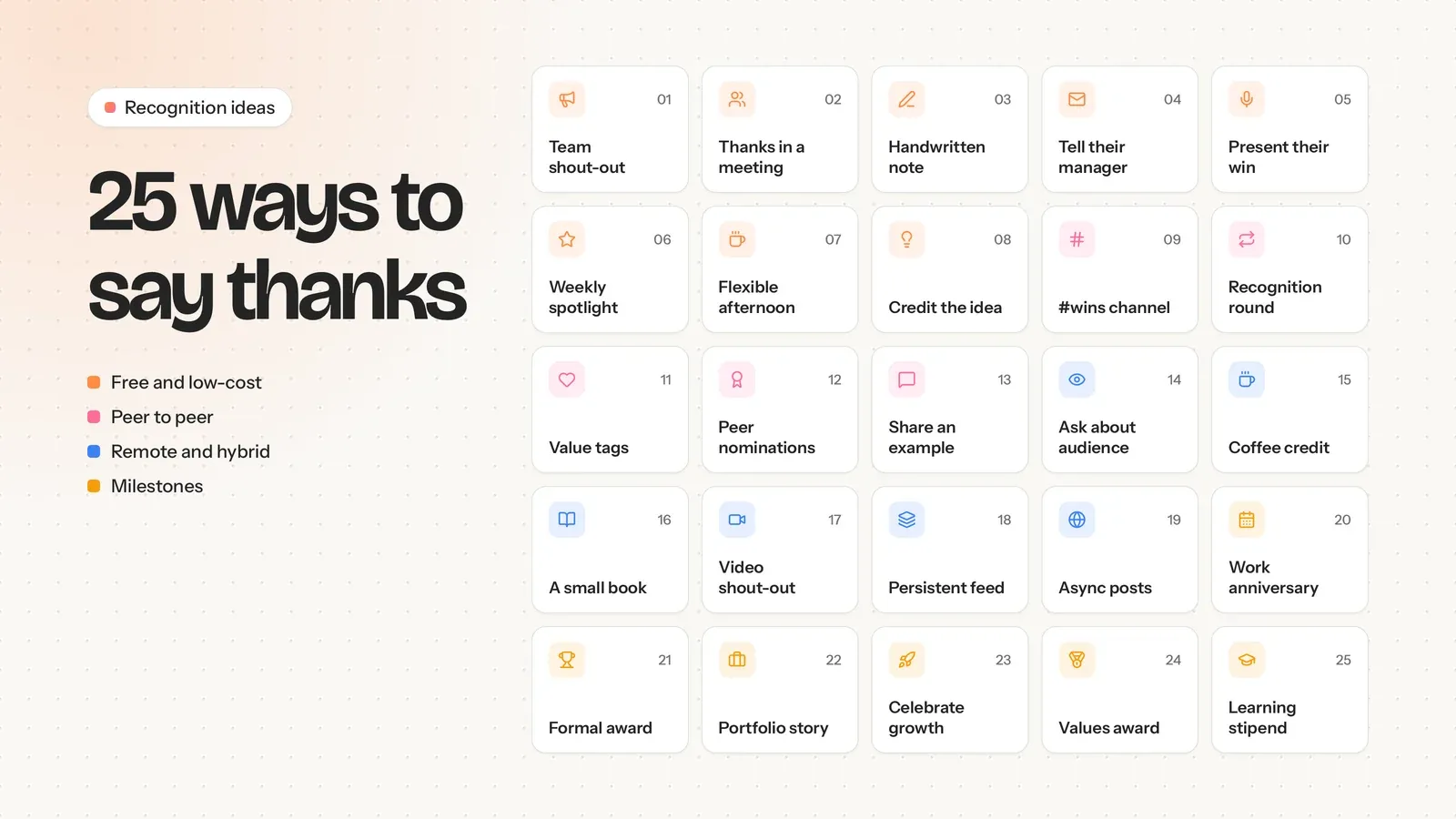
Twenty-five practical ways to acknowledge useful work, from a specific thank-you to a deliberately issued award. Choose the format and audience that suit the person.

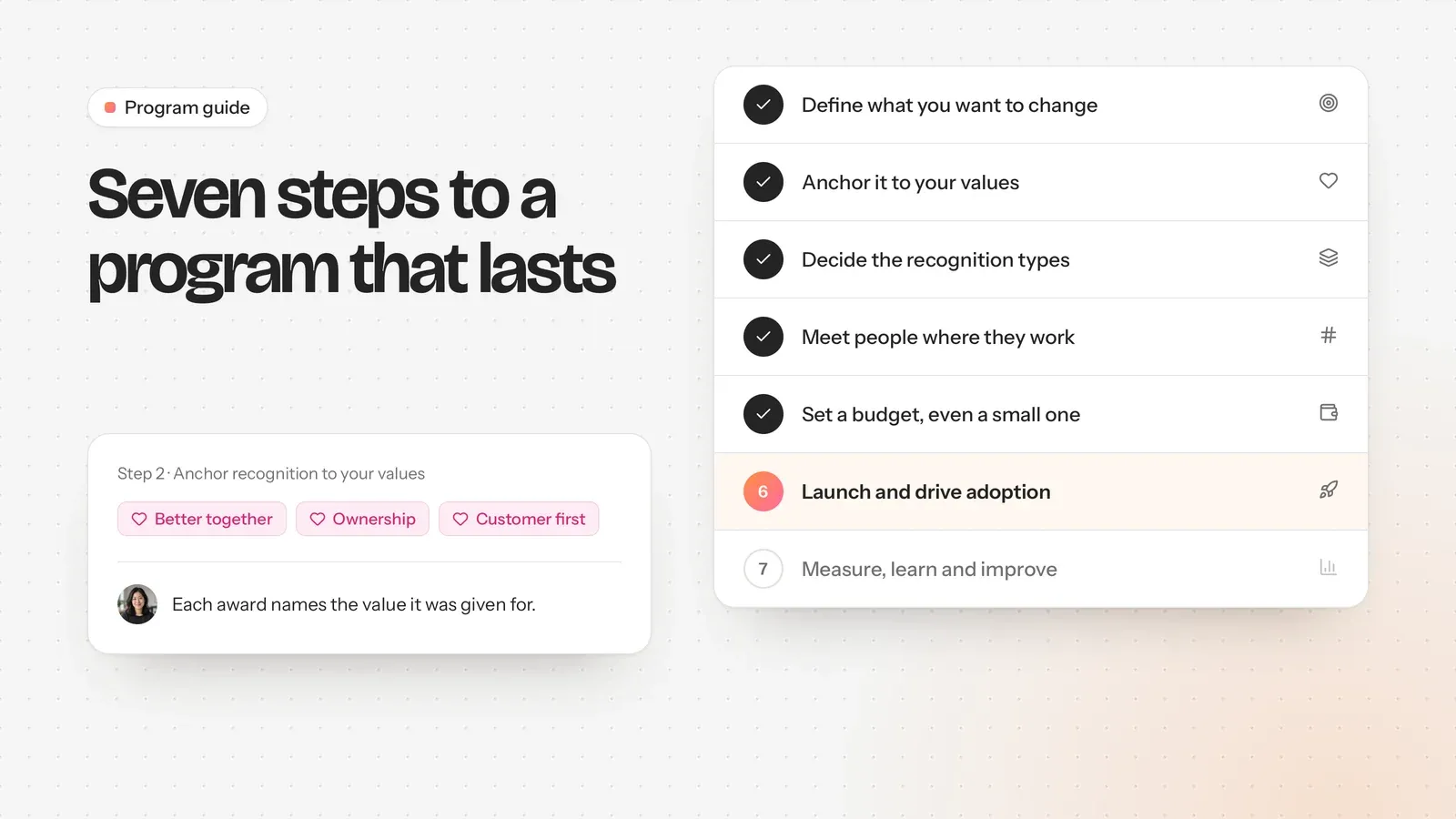
A great recognition program isn't a plaque on the wall — it's a repeatable system tied to your values and measured like any other investment. Here's a practical, seven-step framework for launching one in 2026.

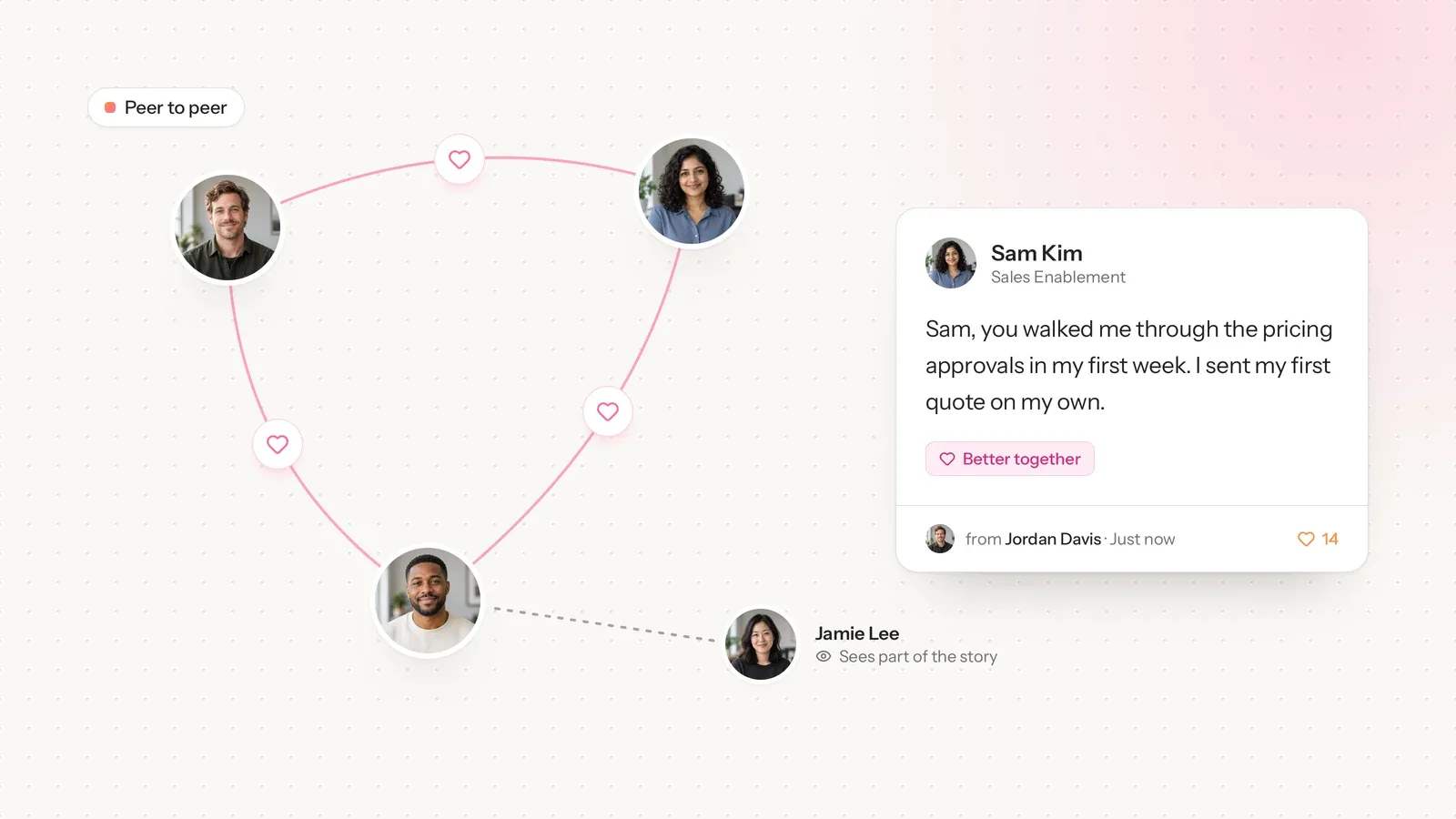
Coworkers see contributions a manager may miss. Invite their perspective with specific examples, an appropriate audience, and a clear distinction between appreciation and formal evaluation.

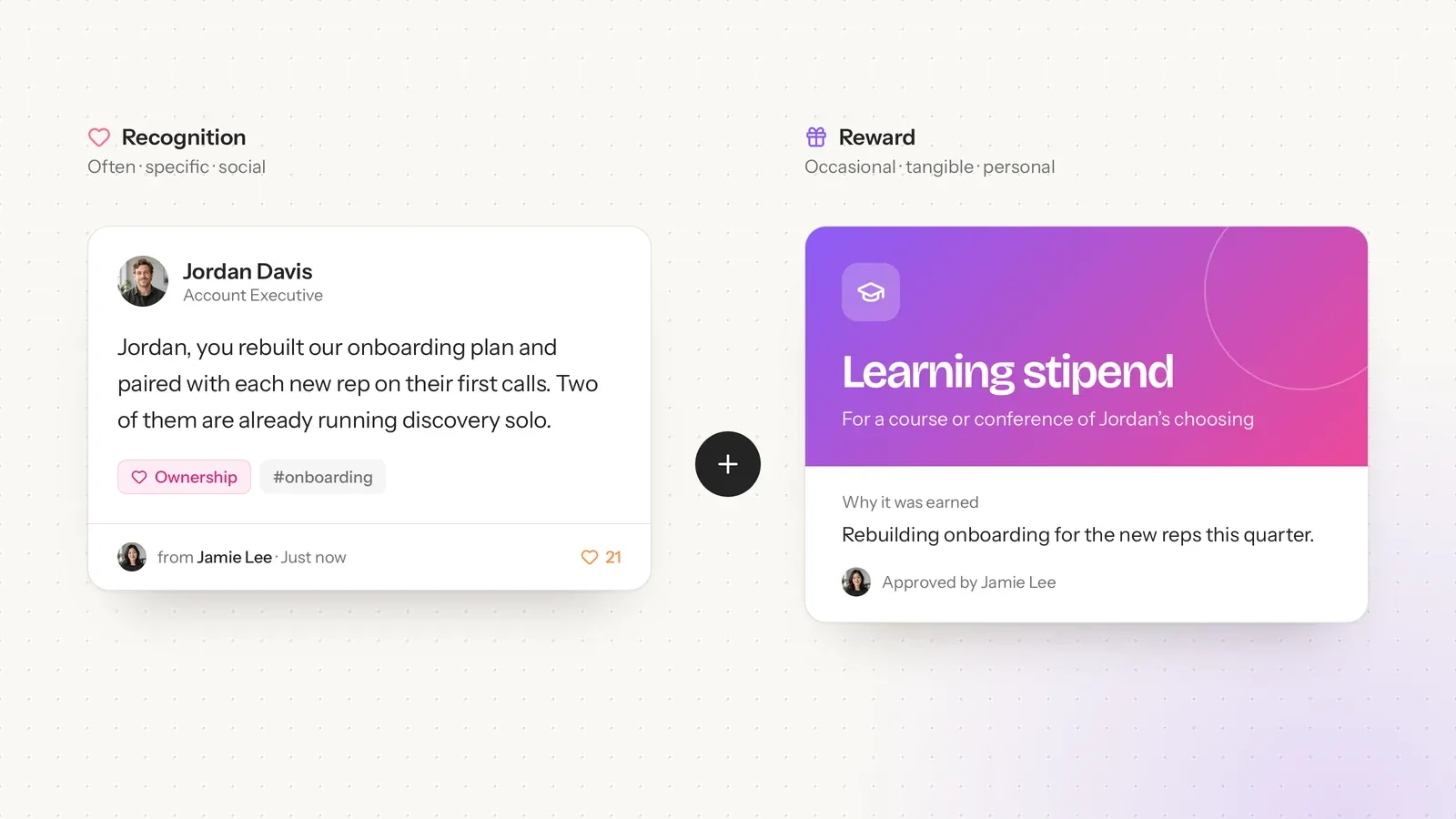
Recognition and rewards are often used interchangeably, but they do different jobs. Understanding the difference — and how to combine them — is the key to a program that motivates without becoming a transaction.

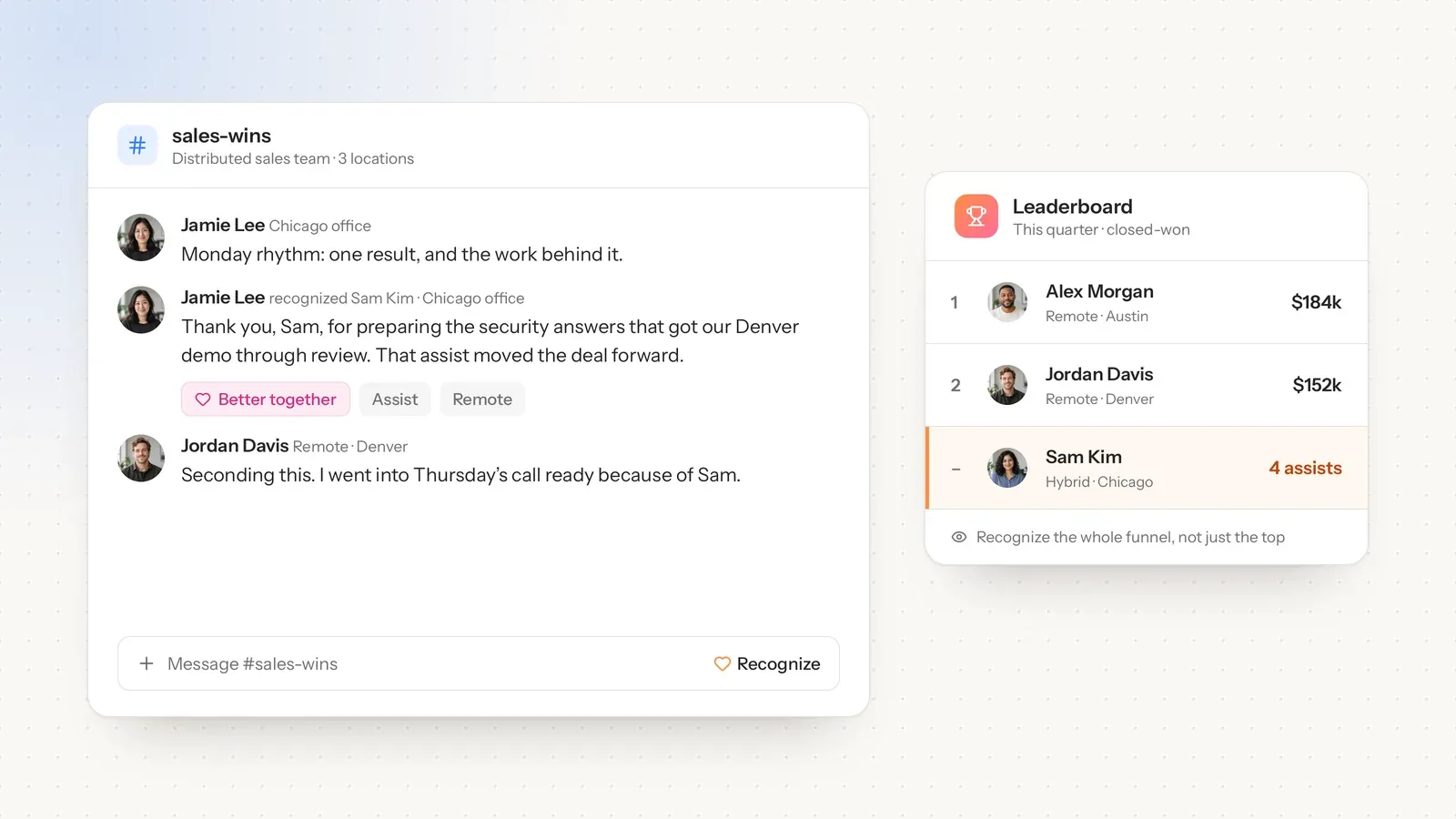
Distributed sales teams are motivated, competitive, and easy to overlook between the deals that close. Here's how sales leaders can build recognition that fuels the whole floor — not just the top of the leaderboard — in 2026.

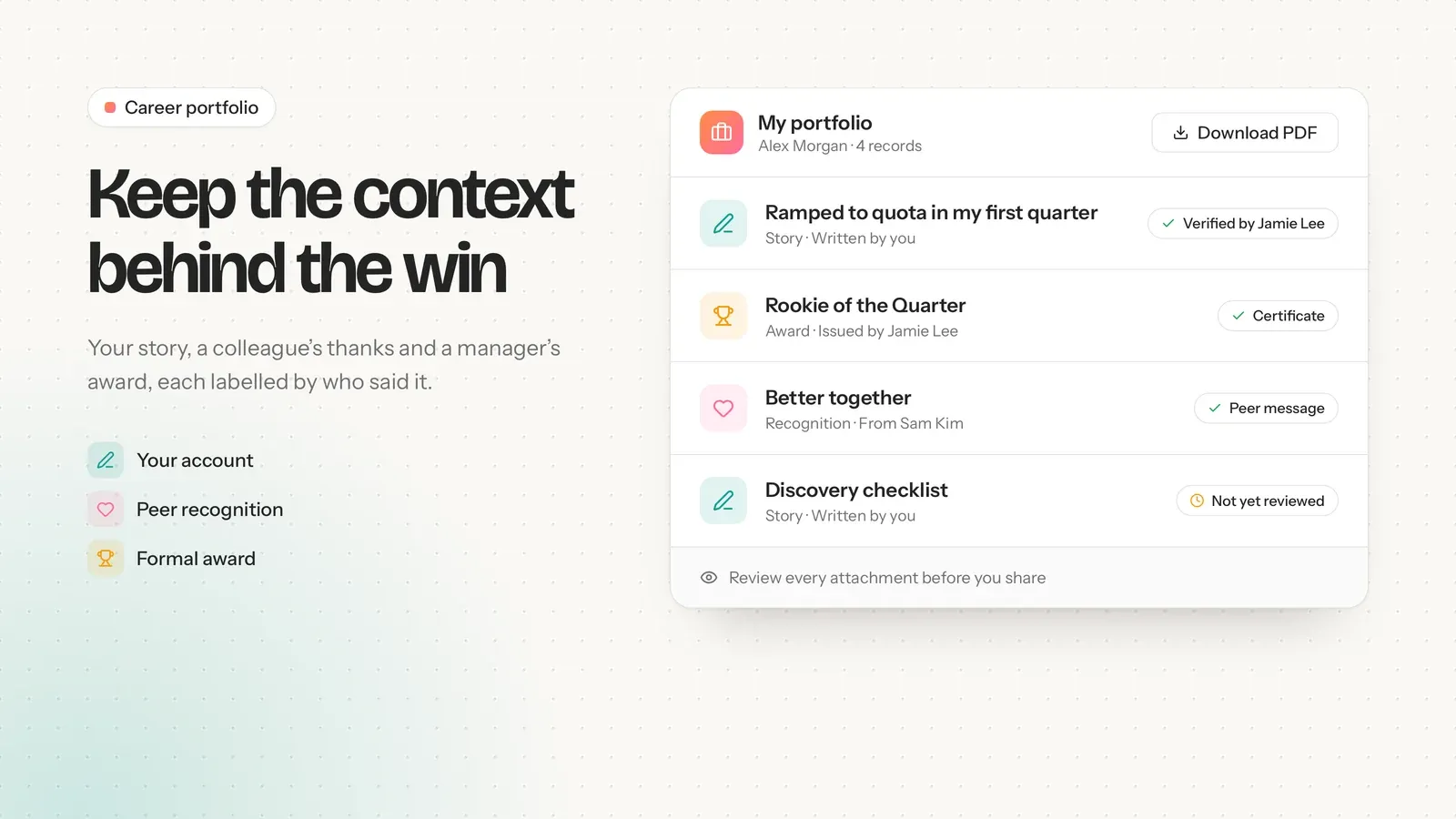
A useful portfolio preserves the context behind your work: what you contributed, who can speak to it, and which details are appropriate to share.

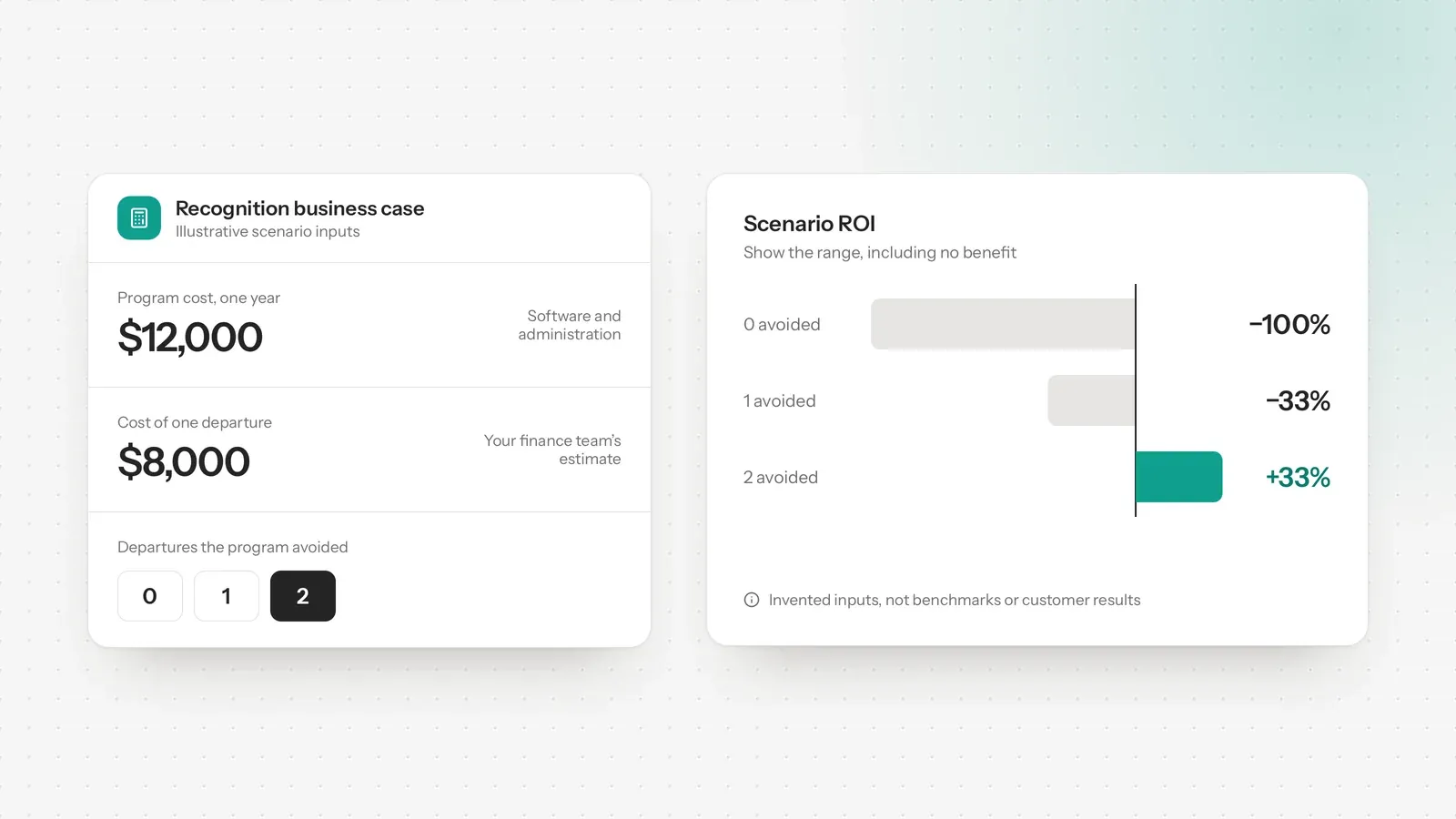
Build a recognition business case with your own costs, explicit assumptions, and a clear distinction between an observed change and a benefit you can attribute to the program.

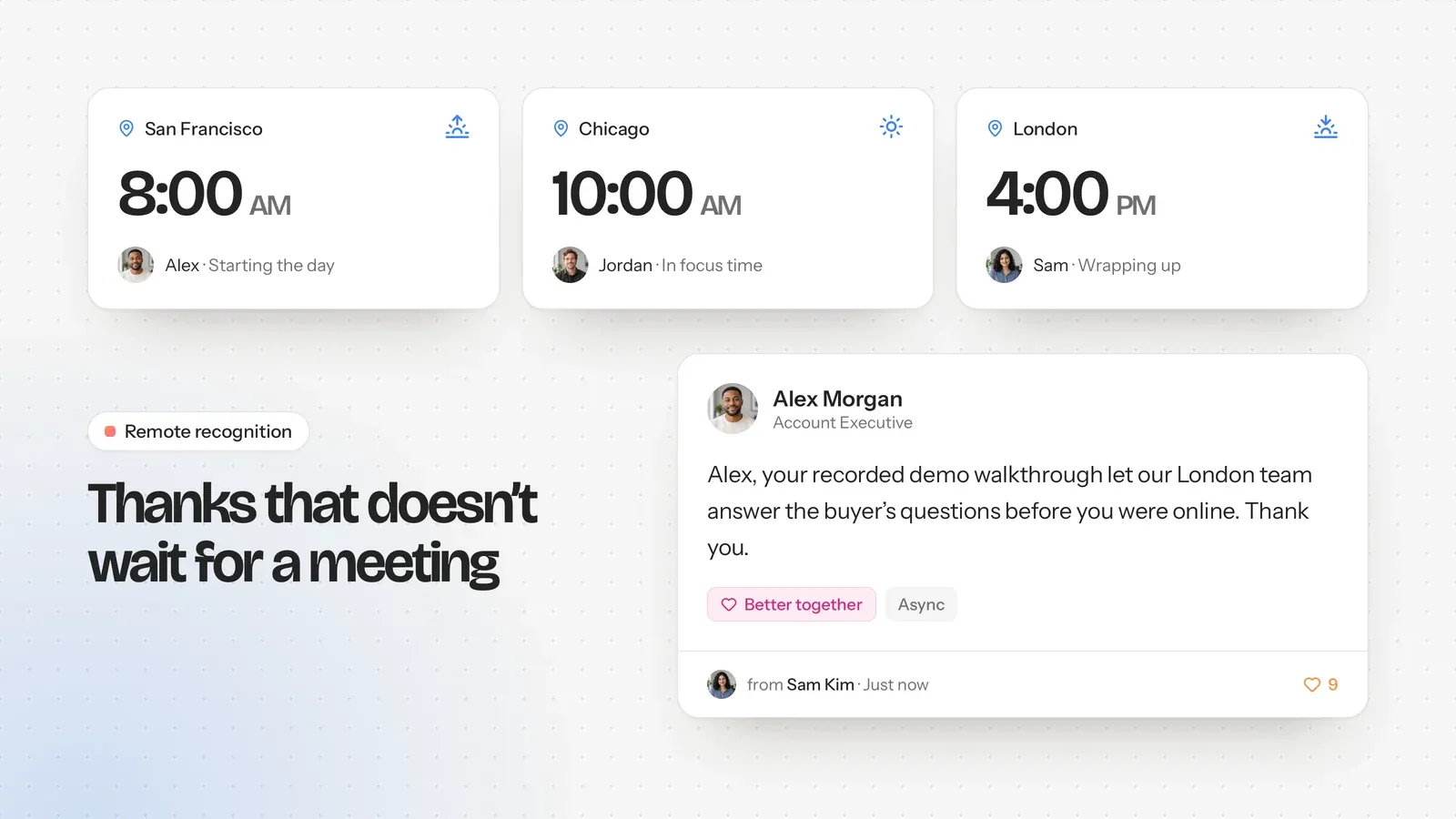
Ten practical ways to notice good work across locations and time zones, respect individual preferences, and keep recognition specific.

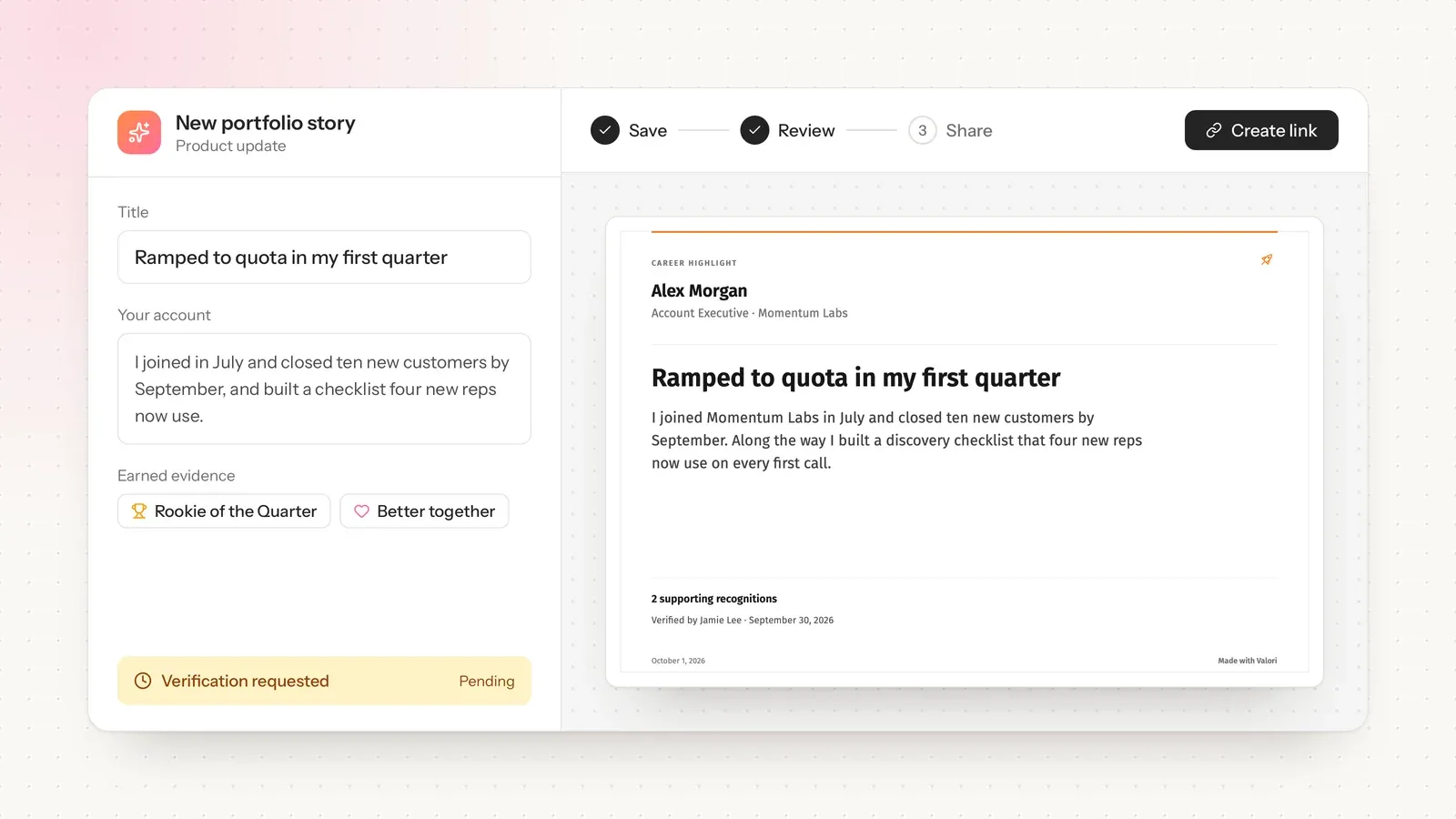
Bring together your account of an achievement and selected earned evidence, then review the exact story before downloading or sharing it.
Give your team one place to recognize great work, issue real awards, and keep a record worth sharing.