Every closed deal has a team behind it. Credit all of it.
A practical guide to sales team recognition: celebrate the close, credit the assist, and put the habits behind strong selling on the record.
Sales team recognition names the behaviors and contributions behind a result. Celebrate closed business, but also the discovery, coaching, teamwork, and follow-through that helped it happen. Keep recognition separate from compensation and formal performance decisions.
Start with what you want the team to repeat.
A revenue leaderboard tells you who closed. It rarely tells you who clarified an ambiguous requirement, challenged an unrealistic promise, or helped a new rep prepare for a difficult call. Make those contributions part of the team’s story.
Choose a few behaviors that reflect how your team wants to sell. Describe observable work, rather than rewarding personality or visibility. A quieter rep who leaves an excellent handoff deserves attention alongside a confident presenter.
- Discovery
Uncovering the real decision process before proposing a solution.
- Partnership
Involving a specialist early and crediting their contribution.
- Judgment
Setting an honest expectation even when an easier promise might advance a deal.
- Follow-through
Leaving the next team with context they can actually use.
Make the message worth reading.
Name the moment, explain the action, then describe its effect. If several people contributed, be precise about each person’s role. Avoid claiming that one action caused the entire commercial outcome.
Share enough context internally for the team to learn. Before turning that story into a public award or portfolio piece, remove customer identifiers and commercially sensitive details unless you have permission.
A recognition note in three moves
- Name the momentWhen and where it happened
- Explain the actionWhat the person actually did
- Describe the effectWhat changed for the team
Priya, you caught the gap between what we discussed in discovery and what the delivery team had received. You rebuilt the handoff, flagged the open decision, and brought both teams together before kickoff. That gave everyone a clear starting point. Outstanding ownership of the work after the signature.
- Ownership
- Better together
Build a small weekly habit.
Reserve five minutes in an existing team meeting for one or two specific contributions. Invite the people closest to the work to speak. A manager should add context and connect the example to a team value, without rewriting everyone’s praise into corporate language.
Review whose work you have noticed over the last month. If the same few people appear repeatedly, ask what work you are not seeing. Do not solve that by imposing a recognition quota; go closer to the work.
A weekly rhythm, at a glance
- Every weekFive minutes in the team meeting
One or two specific contributions, not a roll call.
- In the roomThe people closest to the work speak
The manager adds context and links it to a team value.
- Every monthLook at whose work you have noticed
If the same names repeat, go closer to the work.
Give everyday praise and formal awards different jobs.
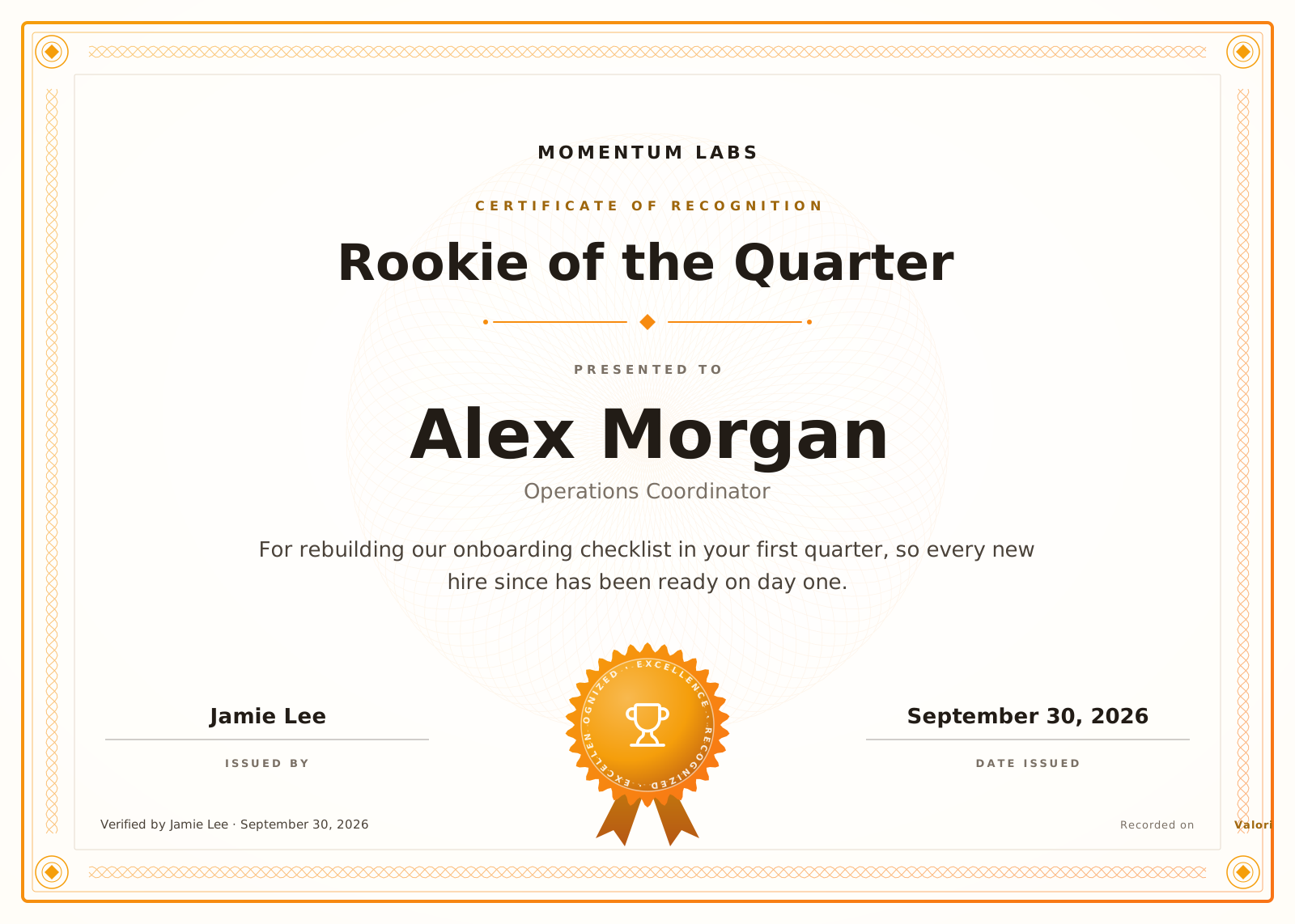
Use Valori’s recognition feed for timely peer appreciation. Use a manager- or admin-issued award when a contribution meets a defined standard worth formally celebrating. An award certificate can mark that achievement; an employee can decide what to include in a shareable career record.
Start with one team and a clear purpose. Ask whether people can explain what earned recognition and whether useful work is becoming easier to see. Those are better early questions than whether the feed is simply busy.

Put it into practice.
- Choose three behaviors worth repeating.
- Recognize the assist as well as the close.
- Ask people how they like to receive praise.
- Define award criteria before choosing recipients.
- Review customer details before any public sharing.
Common questions
No. Compensation pays for the role and its results. Recognition explains what the team values about someone’s contribution. Keep pay, quotas, and recognition criteria clear so praise does not become a substitute for fair compensation.
Recognize a real contribution you observed: stronger discovery, useful coaching, a careful handoff, or sound judgment. Describe what improved without implying the rep delivered revenue that has not materialized.
Make room for recognition.
See how Valori brings team appreciation, formal awards, and career stories together.
Explore Valori