Start with the work someone actually did
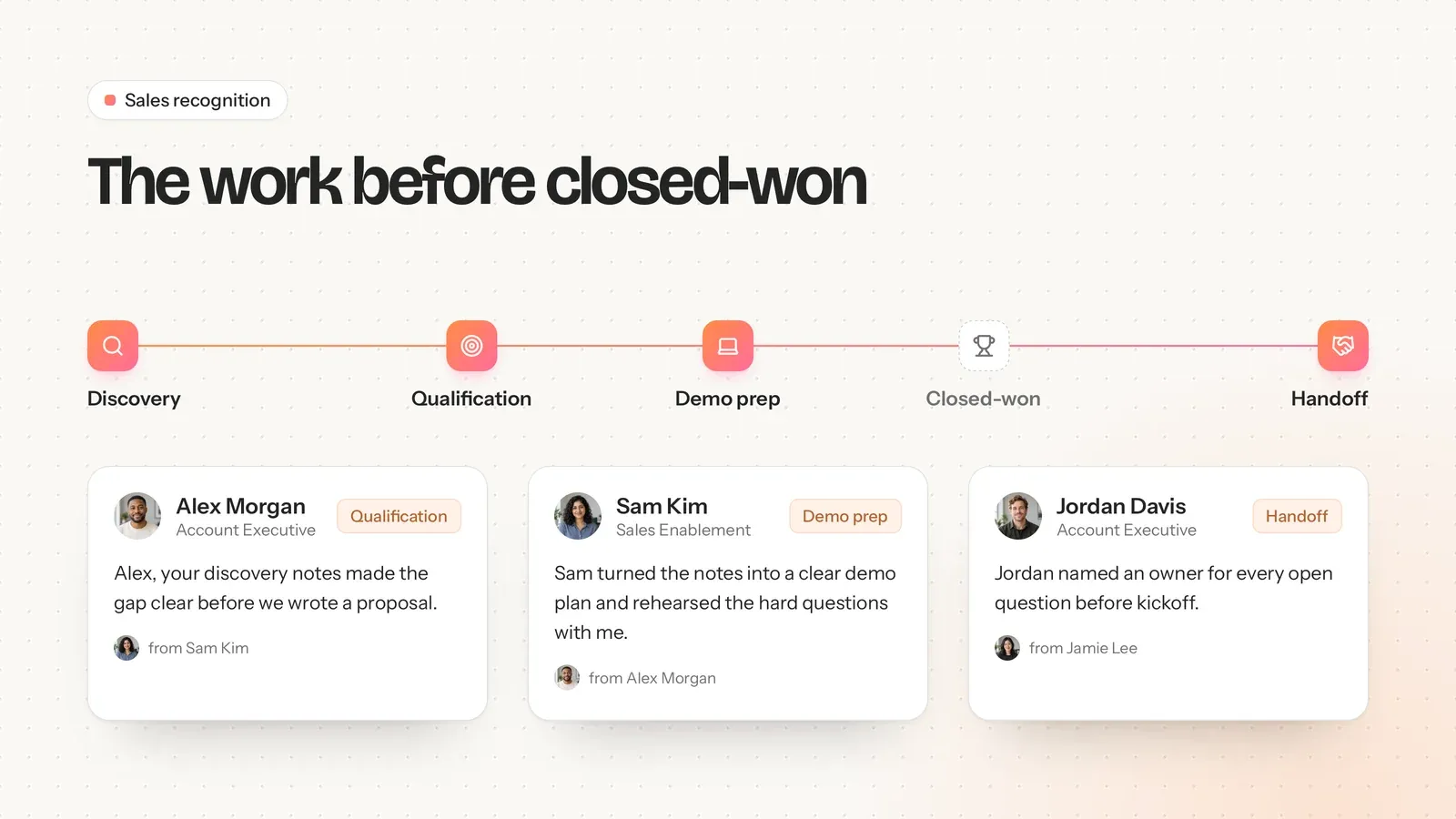
A teammate catches an error before a proposal leaves the building. A new rep asks the question that reveals a poor fit. A manager makes room for someone else to lead. These contributions deserve attention even when they do not produce a headline result that afternoon.
Recognition gives people a way to say: I saw the work, I understood its value, and I want you to know. That is a useful practice in its own right. It does not need an inflated return-on-investment claim to justify it.
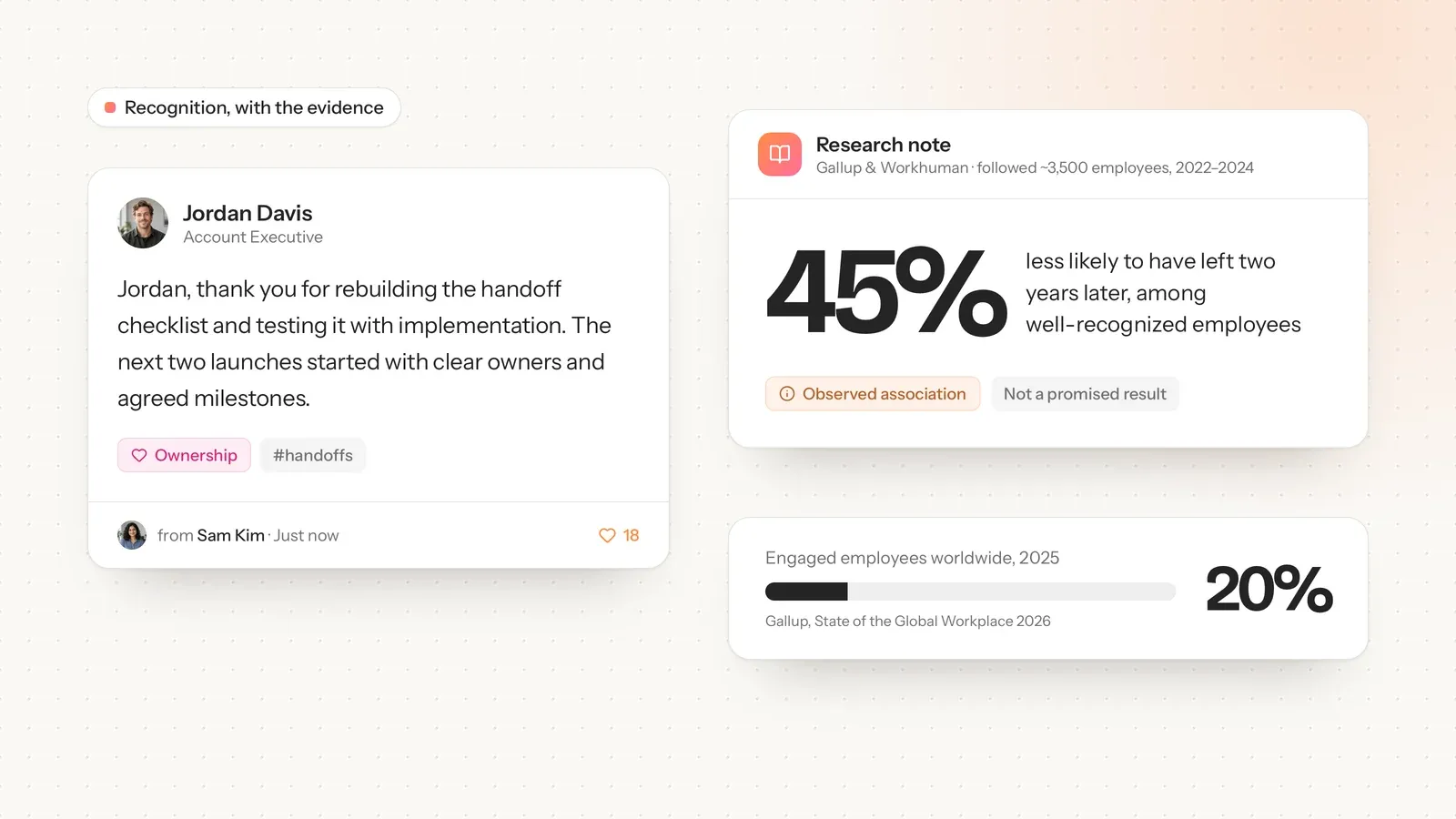
There is also a serious research context. Gallup's 2026 State of the Global Workplace reports that 20% of employees worldwide were engaged in 2025, down from 21% in 2024. These are global engagement estimates, not a measure of how often someone receives praise. They should prompt inquiry rather than a diagnosis of your own team. Read Gallup's 2026 report.
The practical question is smaller and more useful: which contributions are being missed, and how can we acknowledge them accurately?
What recognition research does—and does not—show
In research published in September 2024, Gallup and Workhuman followed nearly 3,500 employees from 2022 to 2024. Employees who were well recognized were 45% less likely to have left their organization two years later. That is an observed relationship, not a promise that installing a recognition program will reduce your company's turnover by 45%. Read the longitudinal study summary.
The distinction matters when deciding what to fund. People can feel appreciated and still leave because of pay, limited progression, poor scheduling, or an unreasonable workload. A recognition feed cannot repair those conditions on its own. Managers need to listen to the underlying concern and act on it.
Treat recognition as one part of the employment experience. Use your own baseline, ask employees whether acknowledgment feels useful, and avoid presenting changes in retention as proof of a single cause.
Replace generic praise with a specific account
A strong message identifies the contribution, explains its effect, and gives the recipient appropriate credit. You do not need elaborate language or a large audience.
Here is an illustrative internal example:
“Morgan, thank you for rebuilding the handoff checklist and testing it with our implementation team. The next two launches started with clear owners and agreed milestones. You turned a recurring source of confusion into a process the whole team can use.”
The message names observable work. It describes a bounded result instead of claiming Morgan transformed the entire business. It also makes the contribution understandable to colleagues who were not in the project meetings.
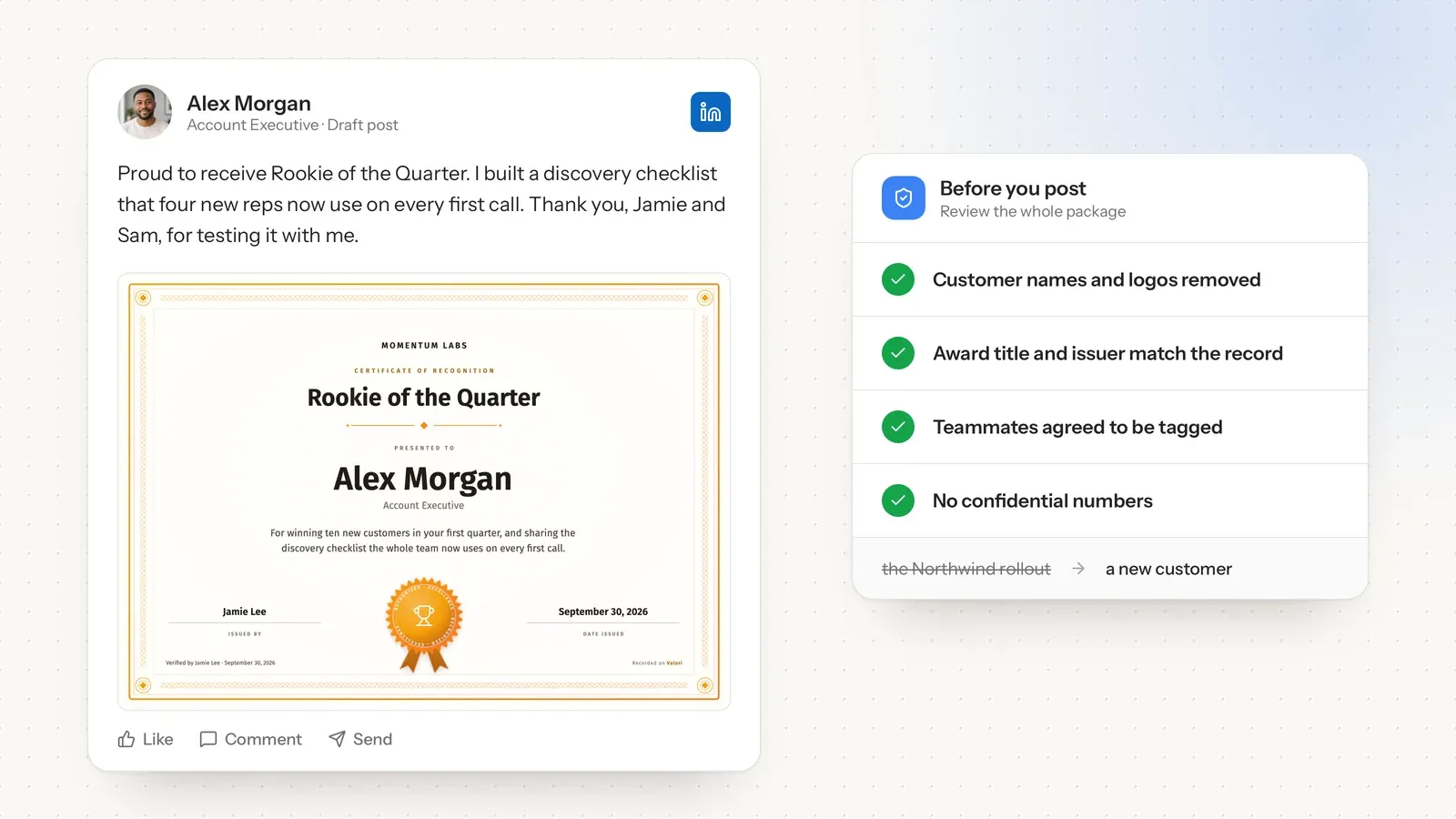
Before sending, check whether the recipient would welcome a team announcement or prefer a private thank-you. Keep customer information within its authorized audience. A message that is appropriate inside the company may need rewriting before it becomes a public career example.
Let peers contribute without outsourcing the manager's job
Colleagues see different parts of a person's work. A sales engineer notices careful preparation. An operations teammate sees who fixes the handoff. A new starter knows who explained a difficult process without making them feel foolish.
Give those people an easy route to express appreciation. Then ask managers to add their own perspective: how did the contribution support a team goal, develop a capability, or improve a decision?
Avoid turning this into a quota. Requiring every person to send five messages can produce five messages without producing any better observation. A more useful manager habit is to review recent work, notice who has not been heard from, and ask for context before assuming they contributed less.
Visible recognition is a partial record. It reflects who saw the work and chose to write about it. It should not become a popularity score or a substitute for a thoughtful performance review.
Keep recognition, awards, and career evidence distinct
These three things can support each other, but they make different claims.
- Recognition is someone's acknowledgment of a contribution. A peer can offer it without conferring a formal credential.
- An award is a deliberate decision by an authorized issuer. In Valori, managers and administrators issue awards with certificates.
- A portfolio story is a selected account of work. It may include earned recognition or awards, and any verification status should be presented exactly as recorded.
An attractive certificate does not make every statement independently verified. A portfolio card should not imply that a manager approved it if they have not. Clear labels make the evidence more credible because a reader can understand who said what.
Valori supports these separate records. Employees can prepare selected portfolio stories and review their content before sharing. Receiving everyday recognition does not automatically issue an award or publish anything to LinkedIn.
Run a small, honest first month
Choose one team and explain the purpose: make useful work easier to notice. Share two or three good examples, invite peer contributions, and give managers time to participate. Review the experience after a month.
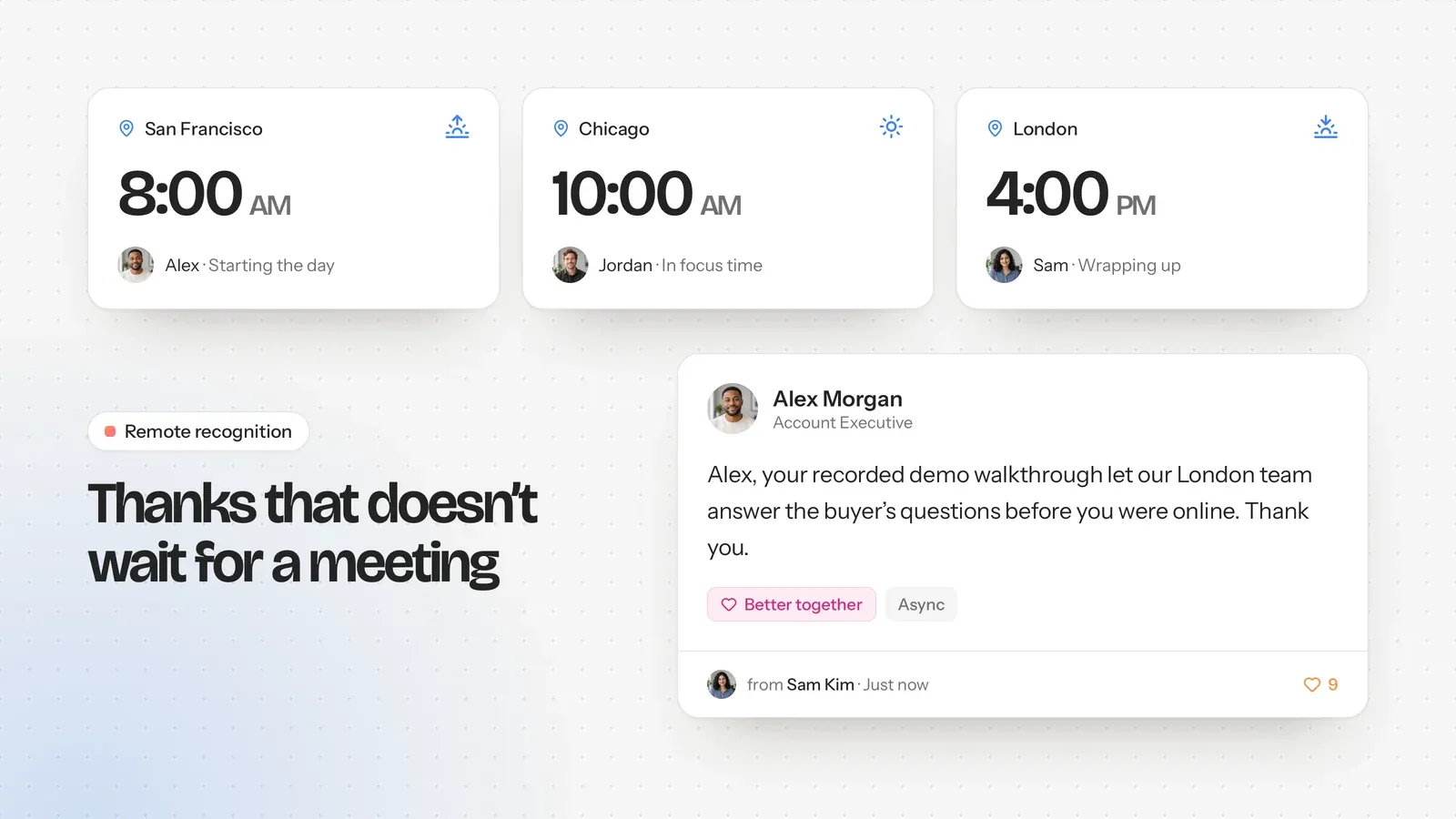
Ask whether messages contain enough context to feel meaningful. Check whether acknowledgment reaches support roles, remote colleagues, and newer employees. Ask recipients what felt right and what felt awkward. Address barriers without pressuring people to perform enthusiasm.
Track participation and distribution as operational signals, not as a leaderboard of employee value. If engagement or turnover changes, document other changes happening at the same time. A small pilot can tell you whether the practice is usable; it cannot settle every question about long-term business impact.
The aim is a record people recognize as true: the work they did, why it mattered, and the colleagues who helped. That is a stronger foundation than another unsupported percentage.
Sources
- 1State of the Global Workplace: 2026 ReportGallup, 2026
- 2