The scoreboard tells only part of the story
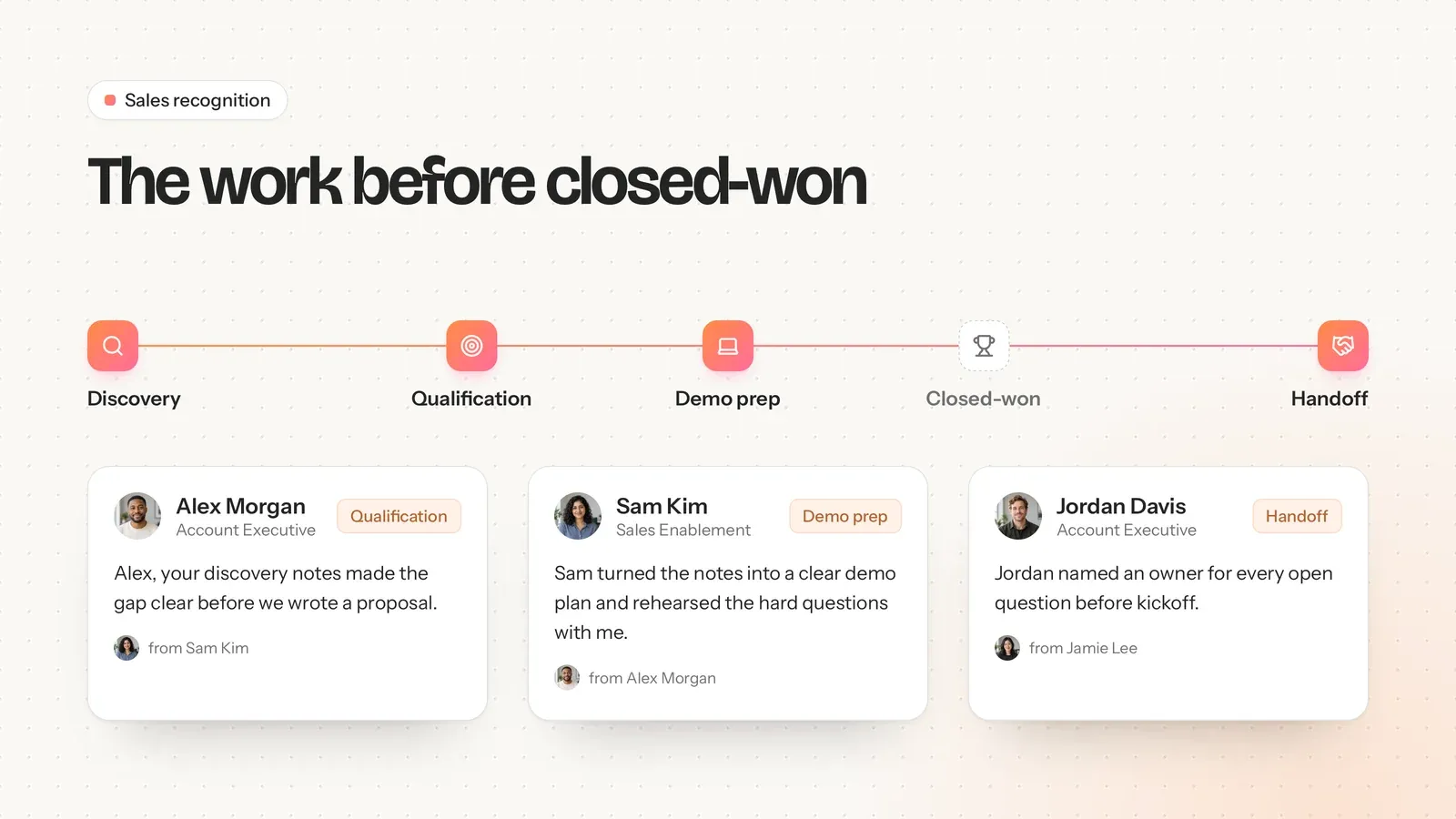
A closed deal deserves a celebration. It is also the end of a much longer chain of work: discovery, qualification, technical checks, negotiation, and a handoff someone else can deliver. If a team's appreciation begins and ends at closed-won, much of that contribution never gets described.
Salesforce's State of Sales announcement, published February 3, 2026, reports that sellers spend an average of 40% of their time selling. Its survey covered 4,050 sales professionals across 22 countries in August and September 2025. This is vendor-sponsored survey evidence, not a time-and-motion study of your team. Read the report announcement and methodology.
That finding is a reason to examine the work around selling, not to celebrate every administrative task. Some work protects quality; some is avoidable friction. Recognition should make the useful contribution clear while leaders remove unnecessary work.
Here are five kinds of contribution worth noticing, followed by a practical way to include them in the team's rhythm. The examples are illustrative, not customer testimonials.
1. Qualification that protects everyone's time
A rep who identifies poor fit early may have less pipeline to show that afternoon and a better decision to show the team. Acknowledge the quality of discovery and the honesty of the recommendation, rather than treating every disqualification as a loss.
“Elena, your discovery notes made the implementation gap clear before we committed to a proposal. You brought in the right specialist and helped us give the buyer a direct answer. Thank you for protecting their time and ours.”
This message does not invent avoided revenue loss. It identifies a decision and why it was responsible. Keep deal details inside the authorized team; a public version should not identify the buyer without permission.
2. Preparation that makes the next conversation better
A useful discovery plan, a carefully tested demo, or a concise summary of unanswered questions can change the quality of a sales conversation. These are more meaningful things to recognize than a raw count of calls or slides.
Ask what changed because of the preparation. Did the team identify a stakeholder they needed to involve? Did a demo show the actual workflow instead of an impressive but irrelevant feature? Did someone surface a limitation before it became a surprise?
Name the work precisely. “You checked the workflow with the specialist and caught an unsupported requirement before the demo” tells the team what good preparation looks like. “You crushed it” leaves everyone guessing.
3. Assists that deserve their own credit
The account owner is not always the only person who advanced the work. An SDR may have clarified the initial need. A sales engineer may have translated a technical concern. A teammate may have shared an approach that made the next conversation easier.
“Noah, thank you for turning the discovery notes into a clear demo plan and walking me through the difficult questions. Your preparation helped me explain both what we can deliver and where we need another conversation. I went into the meeting better prepared because of you.”
That is a peer's account of a specific assist. It does not pretend to be a formal evaluation. When a manager later recognizes the deal, include the collaborators whose contributions they can substantiate rather than crediting the visible closer alone.
4. A handoff the next team can use
A signed agreement is not the customer's entire experience. Implementation and customer success need accurate expectations, decisions, owners, and open questions.
Recognize the rep who makes those things clear. Ask the receiving team what was useful rather than assuming that a long handoff document was a good handoff.
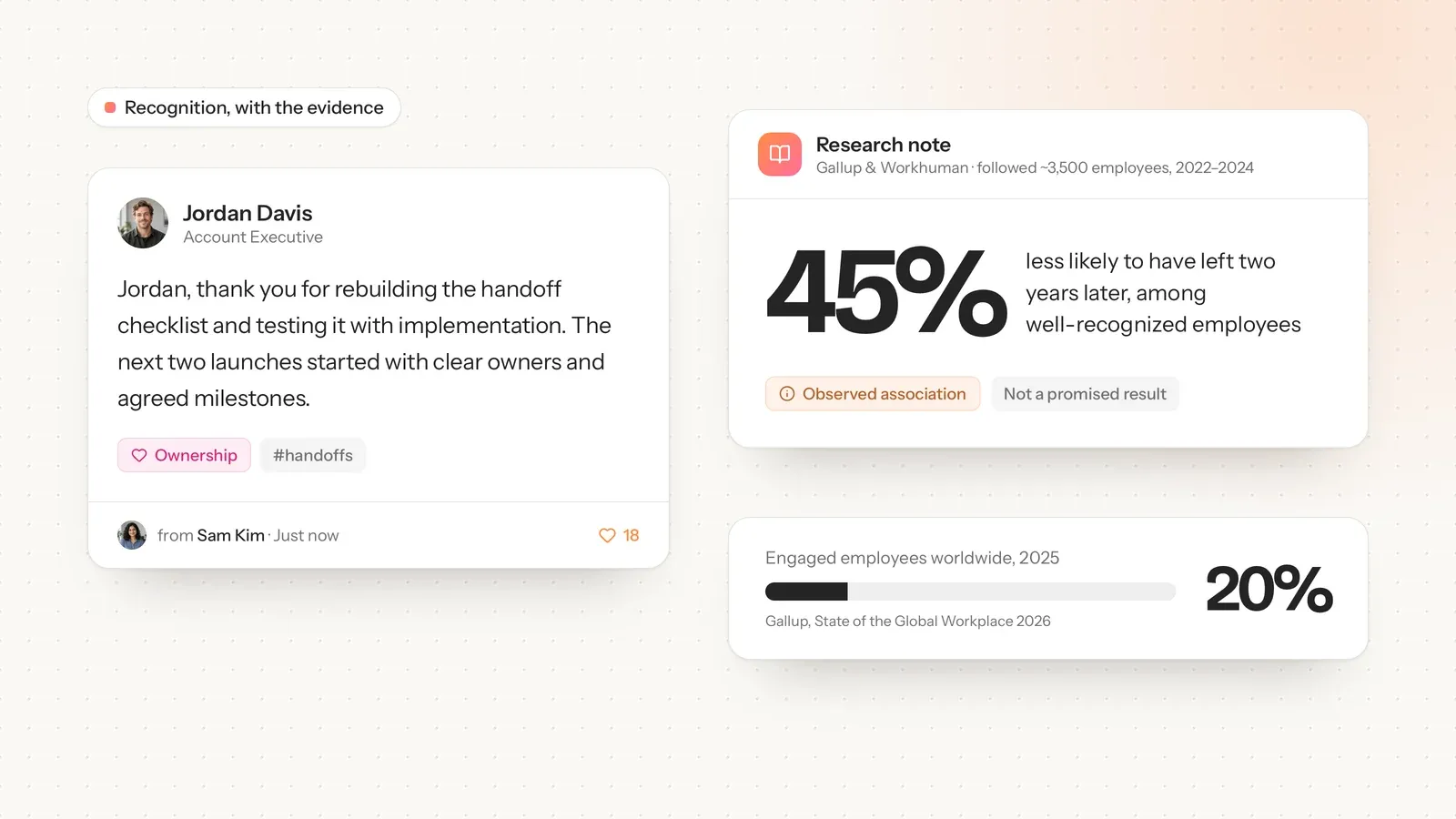
“Sam, the launch handoff clearly separated agreed commitments from open questions and named an owner for each next step. Our implementation team could start the kickoff with the same understanding as sales. Thank you for making that transition easier.”
Avoid rewarding heroic recovery while ignoring the quieter work that prevents the emergency. If every handoff needs rescuing, the response should include a process change, not just another round of applause.
5. Coaching that builds someone else's capability
A senior rep's contribution can include making a newer colleague more independent. Look for a concrete teaching action: listening to a practice call, explaining a decision, or helping someone prepare their own response instead of taking over.
The recognition should credit both people appropriately. A mentor helped; the newer rep did the learning and the work. Do not describe one person's growth as another person's achievement in full.
Ask the learner what helped and whether they are comfortable having the story shared internally. A useful learning moment can involve an earlier mistake, and that detail may not belong in a team-wide celebration. Appreciation should not accidentally turn someone else's development into public exposure.
Give these contributions a place without creating another leaderboard
Use a few minutes of an existing weekly meeting to discuss one result and one contribution behind a result. Invite peers to add context asynchronously. Rotate whose perspective you seek so the same confident speakers do not define every week's story.
Keep compensation and formal award criteria clear. A helpful peer message is not a promise of commission credit, promotion, or an award. When managers or administrators issue an award in Valori, they make a separate decision and provide the reason for that award. Everyday recognition remains valuable without becoming a certificate.
Measure whether the practice produces useful examples and reaches overlooked roles. Do not set a target for how many compliments each employee must earn. A count of messages is not a fair comparison of territories, responsibilities, or opportunity.
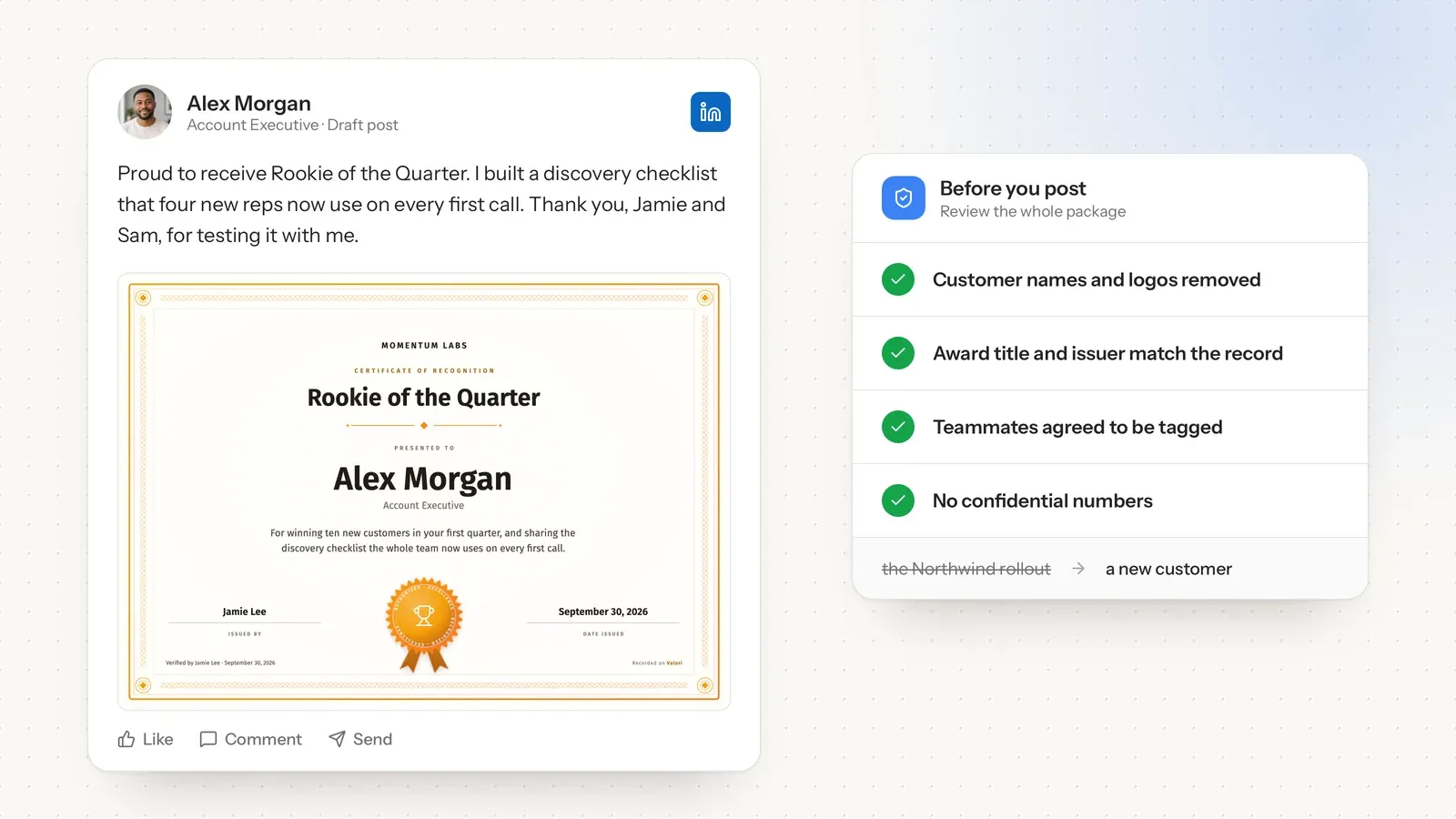
For a portfolio, select a few contributions that tell a coherent story. Preserve the actual role, outcome, and collaborators; leave out customer names, logos, and identifying details unless you have permission to include them publicly. A well-described assist can be stronger evidence of professional judgment than a much larger claim that cannot be supported.
Sources
- 1