The average professional changes jobs 12 times during their career, but their achievements stay locked in company systems. Here's how portable portfolios are changing the game.
The Valori Team
Employee Recognition Experts•Mar 24, 2026
Share:
The $500 Billion Problem You've Never Heard Of
Picture this: You've spent five years at a company. You've led major projects, mentored junior employees, won awards, received glowing peer feedback, and consistently exceeded your goals. Then you leave for a new opportunity.
What do you take with you? A line on your resume that says "Senior Product Manager, 2020-2025." Maybe a couple of LinkedIn recommendations if you remembered to ask. That's it.
All those achievements? Locked in an HR system you'll never access again. Those peer recognitions? Buried in Slack channels that are being archived. That "Top Performer" award? A PDF somewhere on your old work laptop.
According to LinkedIn's 2024 Workforce Report, the average professional will hold 12 different jobs during their career. That's 12 sets of achievements, recognitions, and accomplishments — most of which will simply disappear when they move on.
This isn't just frustrating for employees. It's a massive inefficiency in how we document and transfer professional value. And it's finally being solved.
Key Statistics
12
Average jobs held during a career
4.1 yrs
Average employee tenure at a company
40-50%
Increase in recognition with portable portfolios
Why Traditional Professional Records Fail
Think about the other credentials in your life. Your college degree follows you forever. Your professional certifications are portable. Even your credit score travels with you wherever you go.
But your work achievements? The actual evidence of what you've accomplished and contributed? That stays behind.
The HR System Lock-In Performance reviews, recognition records, and achievement data live in enterprise HR systems designed for company use, not employee portability. When you leave, that data becomes inaccessible — sometimes permanently.
The Verification Problem Even if you could access your old records, there's no way to verify them. Anyone can claim they "led a $10M product launch" on their resume. Without verification, past achievements become just words on a page.
The Format Fragmentation Achievements exist in dozens of formats: emails, Slack messages, performance review PDFs, award certificates, project documentation. There's no single place where your professional story comes together.
The Memory Decay Human memory is unreliable. Studies show we forget 50% of new information within an hour, and 70% within 24 hours. That amazing feedback you got six months ago? You probably can't remember the specifics anymore.
Enter the Achievement Portfolio
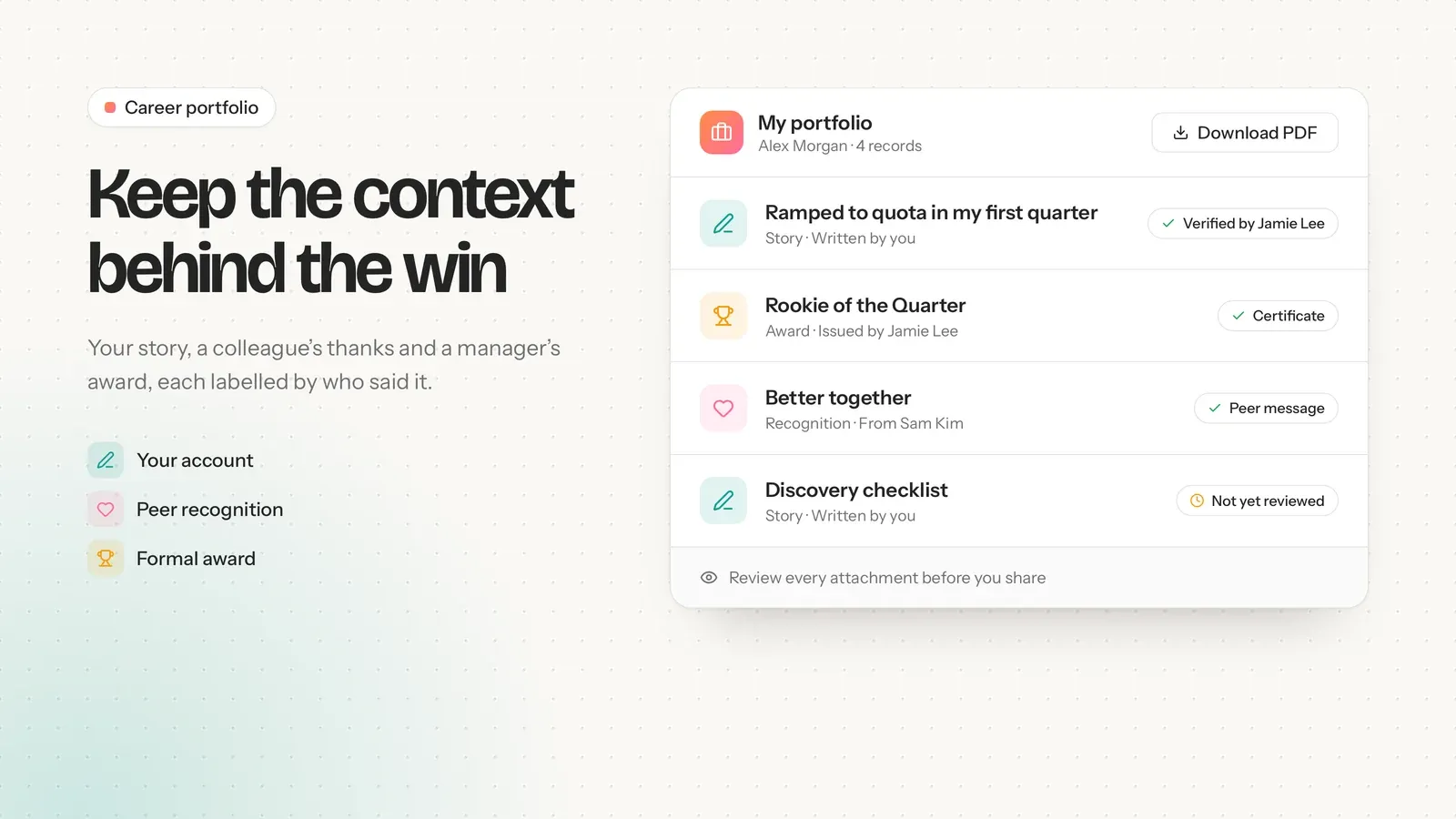
A portable achievement portfolio is exactly what it sounds like: a verified, shareable collection of your professional accomplishments that you own and control, regardless of where you work.
Think of it like a LinkedIn profile with teeth. Instead of just claiming accomplishments, you can prove them with verified records from your employers.
Here's what a modern achievement portfolio includes:
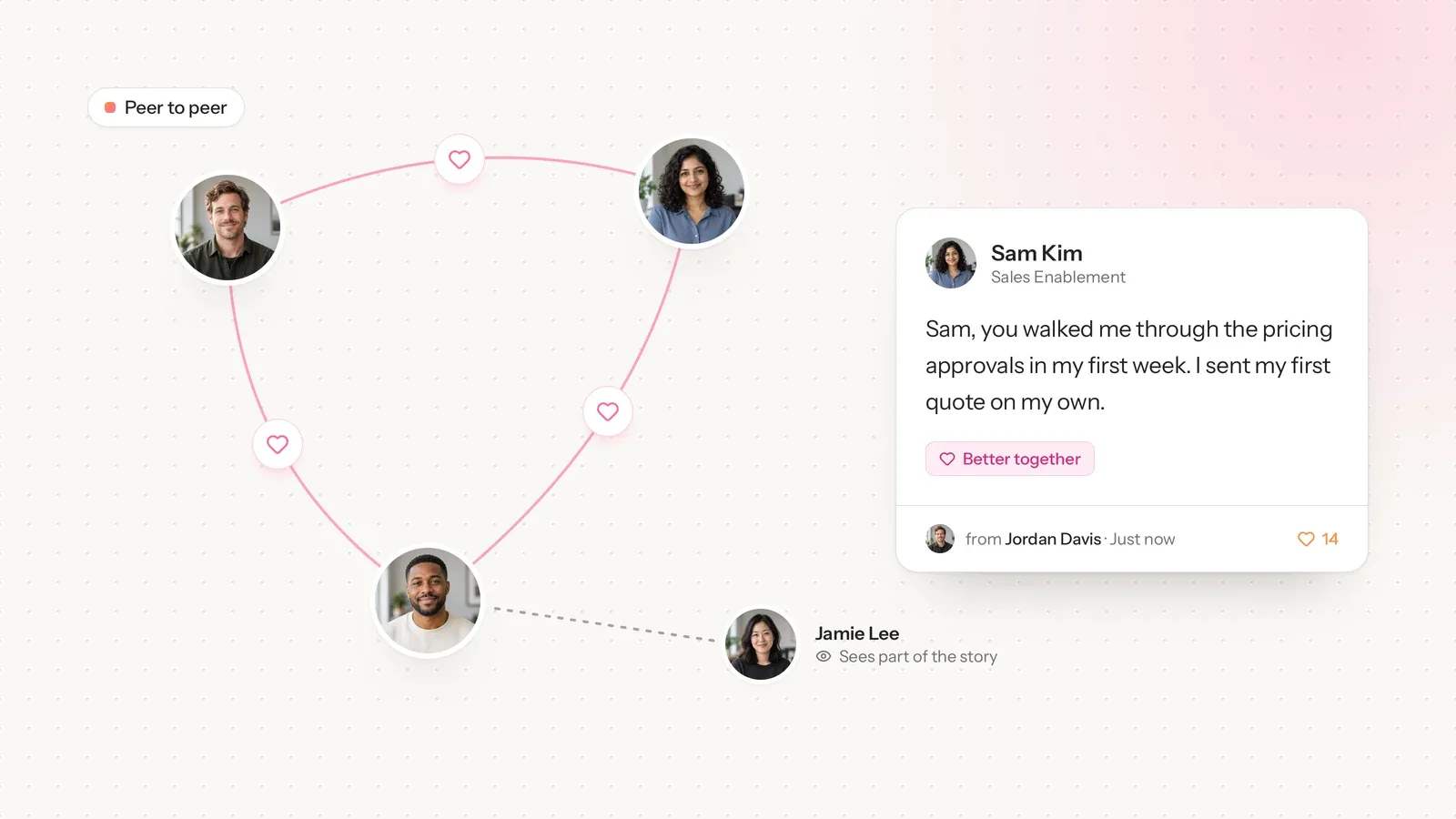
Recognition History Every piece of peer and manager recognition you've received, automatically captured and organized. Searchable, sortable, and ready to share.
Awards and Certifications Formal awards, certificates, and special recognitions — all verified by the issuing organization and presented professionally.
Skills Evidence Not just a list of skills you claim to have, but actual evidence of those skills in action, drawn from your recognition history.
Achievement Timeline A chronological view of your career growth, showing how you've developed and the impact you've made over time.
Shareable Certificates One-click generation of professional certificates for any achievement — perfect for LinkedIn posts, performance reviews, or job applications.
See it in action
Sarah Jenkins
Enterprise Account Executive
2,450
Points
13
Received
1
Awards
Lvl 8
Level
VALOR Portfolio
3 items selected
🏆
Top Closer: Q4 2024
Verified by ACME Corp
A complete view of achievements, awards, and career growth — all in one portable portfolio
How It Works in Practice
Let's walk through a real scenario. Sarah is a Customer Success Manager at a mid-size SaaS company that uses a modern recognition platform.
Throughout her day , Sarah receives and gives recognition through Slack. When a customer sends a glowing email about her support, her manager shares it with a recognition that includes specific tags like "Customer Champion" and "Problem Solving."
Behind the scenes , every recognition Sarah receives automatically flows into her personal portfolio. The platform captures the full context: who gave the recognition, what it was for, when it happened, and what values or skills it demonstrated.
When performance review time comes , Sarah doesn't have to remember every accomplishment from the past quarter. She opens her portfolio and has a complete, searchable record of everything she's achieved, organized by time, skill, or recognition type.
When she applies for a promotion , she can generate a professional summary of her top achievements, complete with verified badges showing they came from real colleagues at a real company.
When she eventually moves on , her portfolio goes with her. Years of achievements, now permanently documented and verifiable, ready to support her next career move.
See it in action
VALOR Portfolio
Share your career currency
3 selected
Sarah Jenkins
Enterprise Account Executive
🏆
Top Closer: Q4 2024
Certified by Valori
Verified Achievement
Share verified achievements to LinkedIn, download as PDF, or generate shareable links
The Business Case for Portable Achievements
This isn't just good for employees. Companies that embrace portable achievement portfolios see measurable business benefits:
Higher Recognition Participation When recognition builds toward something lasting, people take it more seriously. Organizations report 40-50% increases in recognition frequency after implementing portable portfolios.
Stronger Employer Branding Employees who share their achievements publicly become brand ambassadors. Every LinkedIn post about an award or recognition extends your employer brand to that person's entire network.
Better Talent Attraction Forward-thinking candidates actively seek out companies that offer portable achievements. It signals that you value employee growth and aren't trying to trap people with golden handcuffs.
Improved Retention Counterintuitively, making it easier for people to document their achievements doesn't make them more likely to leave. It makes them feel more valued, which improves retention.
Performance Review Efficiency When achievements are automatically documented, managers spend less time trying to reconstruct the past and more time having meaningful development conversations.
Getting Started with Portable Portfolios
If you're convinced this matters — and you should be — here's how to get started:
For Individual Contributors Start documenting your achievements now, even if your company doesn't have a formal system. Keep a running document of recognition you receive, projects you complete, and impact you make. When your company does adopt a portfolio system, you'll have a backlog to draw from.
For Managers Make recognition a habit. The portfolio is only as good as the recognition that feeds it. Aim to recognize each team member at least once per week, with specific details about what they did and why it mattered.
For HR Leaders Look for recognition platforms that include portfolio features. The technology exists today to give your employees ownership of their achievement history. The companies that adopt it first will have a significant advantage in talent attraction and retention.
For Executives Consider this: in a world where employees are increasingly mobile, the companies that help people build lasting career assets will win the war for talent. Portable achievements aren't a nice-to-have — they're a strategic differentiator.
The future of professional achievement documentation is portable, verified, and employee-owned. The only question is whether you'll be an early adopter or a laggard.