The Recognition Managers Can't See
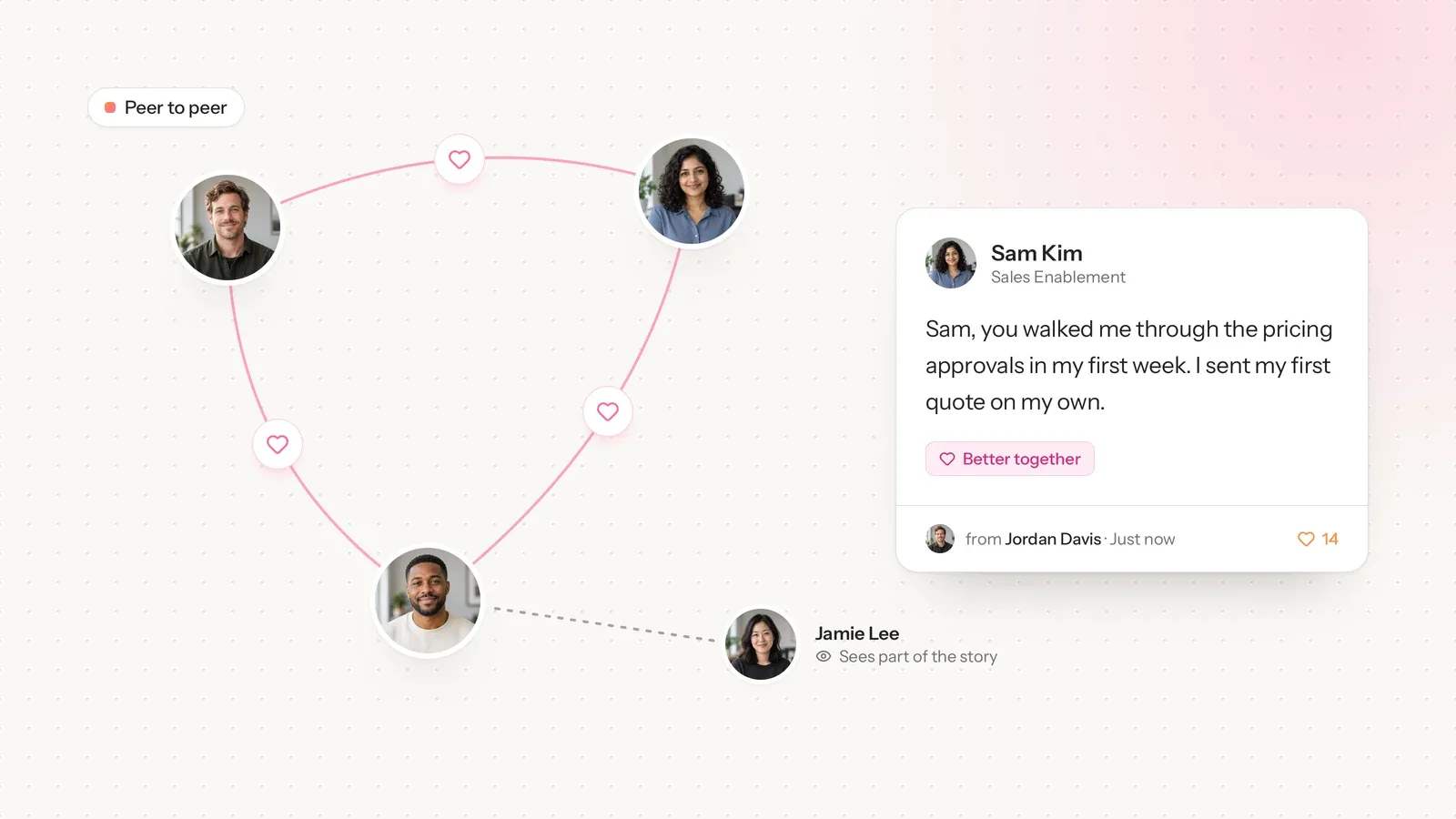
Your manager can't be in every meeting, on every call, or in every thread. But your teammates are. They know who quietly unblocked the release, who mentored the new hire, and who stayed late to save a customer. That's exactly why peer-to-peer recognition is so powerful: it captures the great work that would otherwise go unseen.
Peer recognition also carries a different kind of weight. Being appreciated by the people who do the same work you do — who understand what it took — often feels more authentic than praise from above.
What Peer Recognition Adds
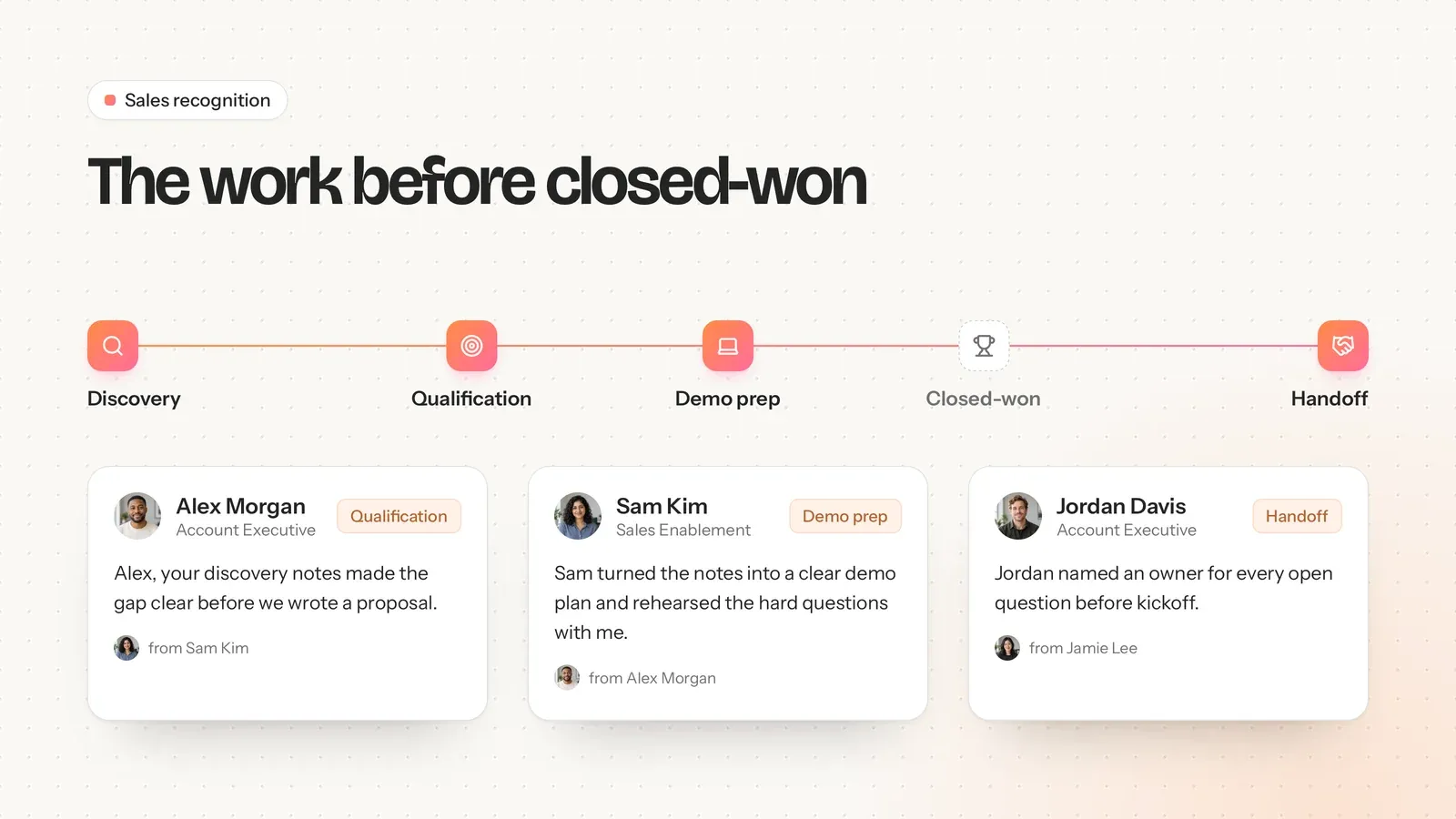
Peers can describe work that happens outside a manager's view. They may notice careful preparation, a useful explanation, or a handoff that made their own job easier.
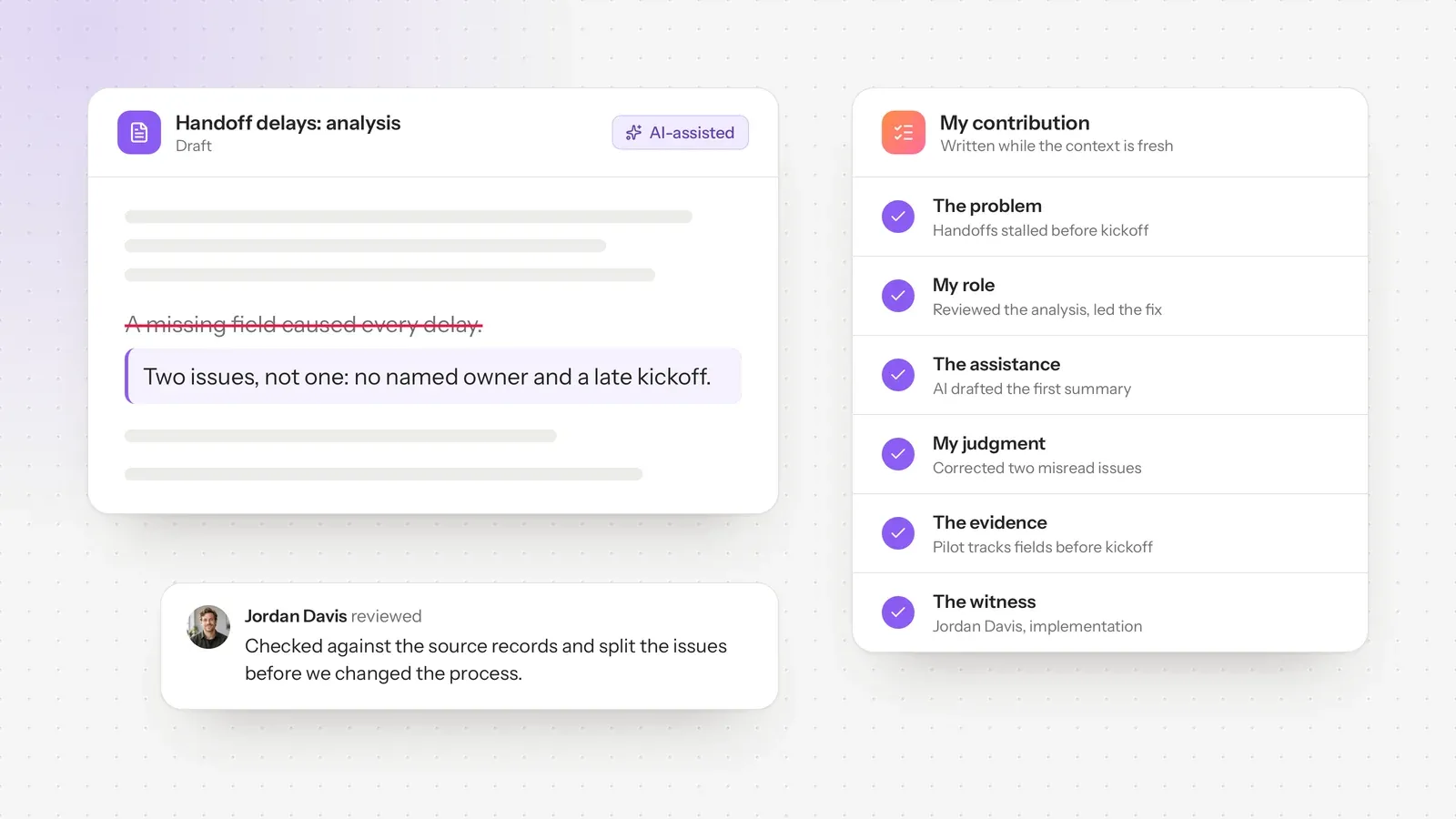
This is a reason to invite their perspective, not a basis for promising a particular turnover reduction. A peer message is one person's account of a contribution. Formal evaluation, award decisions, and verification remain separate responsibilities.
How to Roll It Out Without It Feeling Forced
The fastest way to kill peer recognition is to make it feel like a compliance exercise. Keep it light, genuine, and easy:
Remove approvals. Let anyone recognize anyone. Gating recognition behind managers reintroduces the bottleneck you're trying to escape.
Meet people in their tools. Choose a straightforward workflow and demonstrate the integrations actually configured for your team.
Tie it to values. Give people a simple vocabulary ("this showed customer obsession") so recognition reinforces culture, not just niceness.
Choose the audience. Share internally where appropriate, ask about the recipient's preferences, and keep sensitive context within its authorized audience.
Model it from the top. When leaders recognize peers openly, they provide an example others can adapt.

Sarah Jenkins
Enterprise Account Executive
Sarah absolutely crushed the Alpha Corp deal! She navigated complex stakeholder dynamics, addressed every objection with precision, and closed 40% above our initial target. This is what strategic selling looks like! 🎯
 From Alex Rivera•2h ago
An example of a specific contribution connected to a company value
Common Pitfalls to Avoid
Even well-intentioned programs stumble. Watch for these:
- Popularity contests: if recognition clusters around a few social favorites, coach toward specificity and outcomes, and watch distribution data.
- Empty praise: "great job!" with no detail trains people to tune out. Encourage the what and the why.
- Over-gamification: points and leaderboards can help, but if they overshadow sincerity, recognition starts to feel transactional.
- Recognition deserts: some teams will lag. Surface them with data and nudge their managers.
Keep the Practice Useful
Invite specific accounts of helpful work and ask recipients what they value. Watch for people or roles that are overlooked without setting quotas or demanding reciprocal praise.
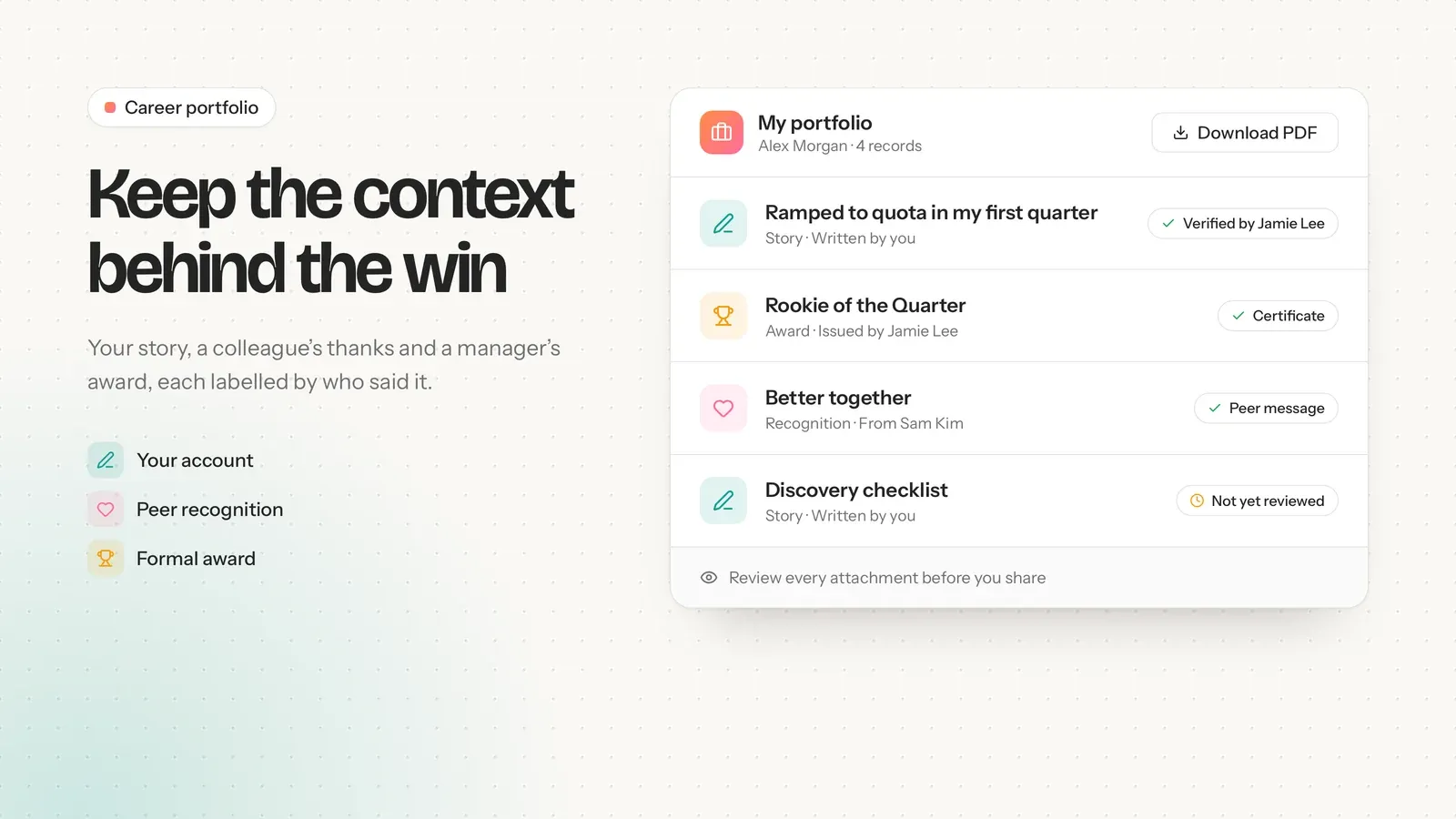
Before reusing internal recognition in a public portfolio or social post, review the complete message and attachments. Remove customer names, logos, and identifying information unless you have permission from the relevant customer or company.
A good peer message does not need to make a large claim. It needs to tell the truth about a contribution the writer appreciated.