Why Most Recognition Programs Stall
Plenty of companies "have" a recognition program. Far fewer have one that people actually use. The difference usually comes down to design: programs that are too infrequent, too top-down, too hard to use, or disconnected from daily work quietly fade away.
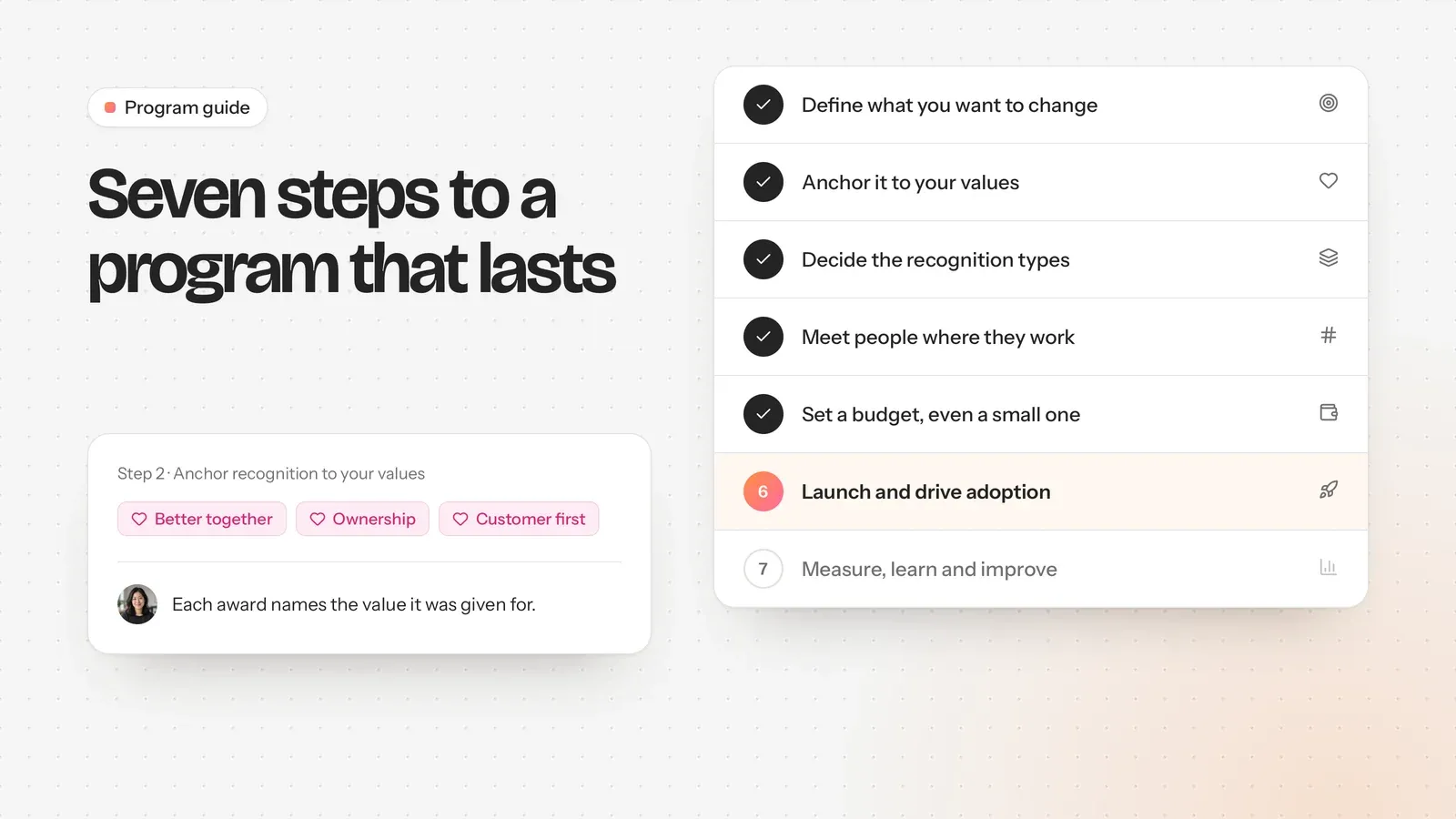
A recognition program that lasts is a system — clear goals, a tie to your values, low friction, and real measurement. This guide walks through the seven steps to build one that sticks in 2026.
Step 1: Define What You're Trying to Change
Start with the outcome, not the tactic. Are you trying to reduce turnover on a specific team? Lift engagement scores? Reinforce a new set of values? Improve cross-team collaboration?
Write down two or three specific goals and the metrics you'll watch (engagement, voluntary turnover, participation, eNPS). This clarity keeps the program focused and gives you the language to evaluate it later.
Step 2: Anchor Recognition to Your Values
Generic praise feels hollow. Recognition tied to specific company values does double duty: it appreciates the person and reinforces the behavior you want more of.
Translate each value into plain language and, ideally, a taggable option in your recognition tool. When someone gives recognition, they should be able to say not just what a colleague did, but which value it demonstrated. Over time this gives you a live map of which values are actually being lived.
Step 3: Decide on Recognition Types
A healthy program blends several forms of recognition:
- Peer-to-peer: anyone can recognize anyone, no approval required
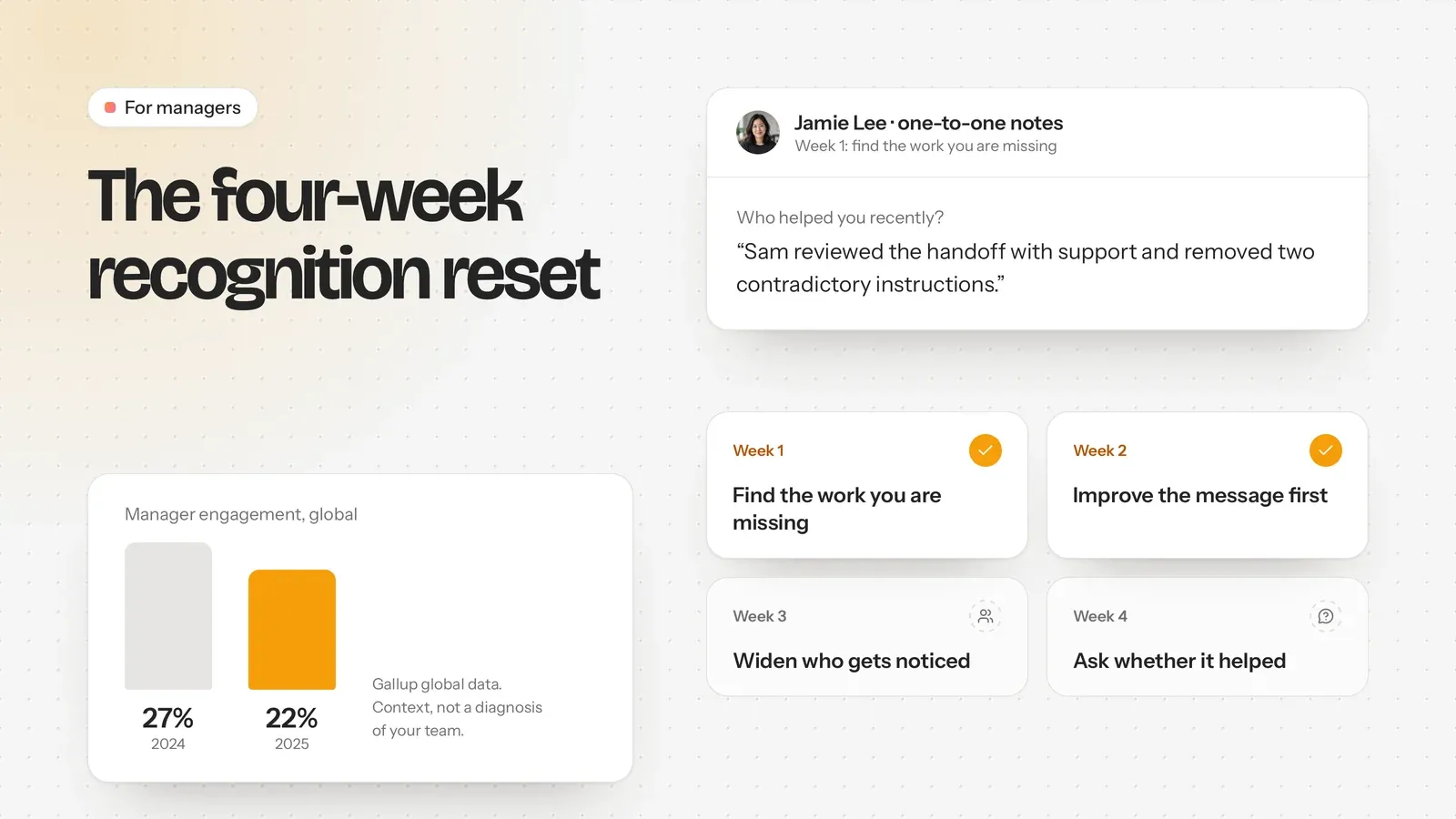
- Manager-to-report: frequent, specific, in the moment
- Milestone: anniversaries, ramp completion, first deals, big launches
- Awards: periodic, values-based, and ideally shareable and verifiable
Don't over-engineer it. Start with peer-to-peer and manager recognition, then layer in awards and milestones once the habit forms.
Step 4: Choose Tools That Meet People Where They Work
Try the workflow with a few teammates and watch where they get stuck. Keep the required steps clear and explain what will be visible to whom.
Choose tools that suit the way your team works and verify the integrations your organization actually supports. In Valori, everyday recognition is separate from manager- or administrator-issued awards; employees can select earned evidence for portfolio stories and review them before external sharing.
Step 5: Set a Budget (Even a Small One)
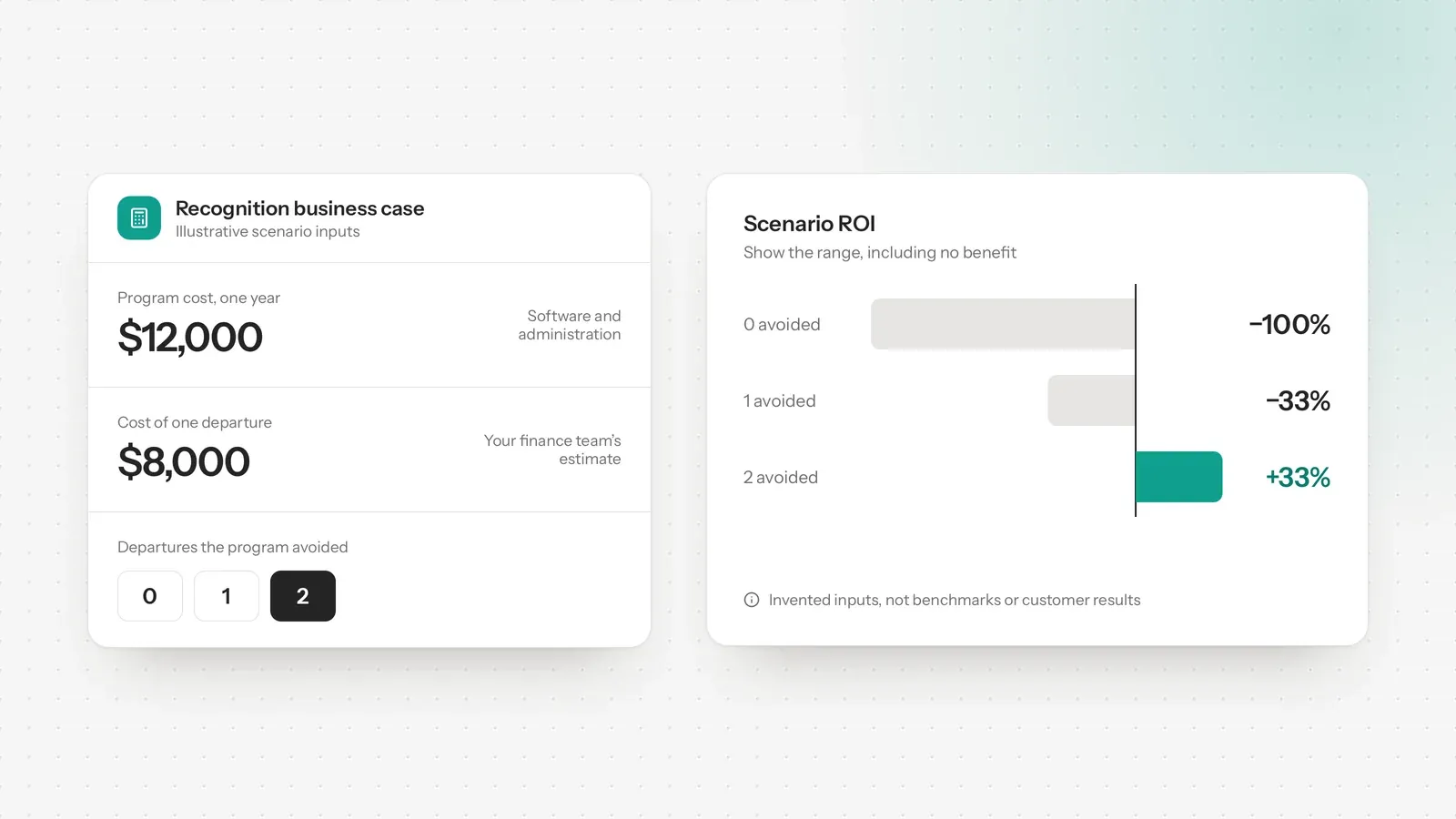
Recognition doesn't require a large budget, but a defined one helps. Decide whether you'll include tangible rewards, how awards are funded, and what managers can give without approval.
A simple, transparent budget prevents the two failure modes: nothing ever happens, or a few managers spend unpredictably. Even a modest per-employee allowance signals that recognition is a real priority, not an afterthought.
Step 6: Launch and Drive Adoption
A launch is a moment; adoption is a habit. To cross the gap:
- Have leaders model recognition first and visibly.
- Kick off with a clear, short explanation of how and why to recognize.
- Build recognition into existing rituals (standups, all-hands, weekly updates).
- Celebrate early participation to create social proof.
- Coach managers who under-recognize — they set the ceiling for their teams.
Manager Insights
Recognition health & engagement trends
Recognitions
847
↑12%Participation
89%
Active Users
156
Cross-Functional
34%
Culture Score
0
Good
Use participation patterns to ask better questions about who is being noticed
Step 7: Measure, Learn, and Improve
Treat recognition like any other investment and watch the numbers:
- Leading indicators: recognition frequency, participation rate, distribution across teams, manager participation
- Lagging indicators: engagement scores, voluntary turnover, eNPS, absenteeism
Look for blind spots — teams or roles that are recognition deserts — and address them directly. Review the data monthly at first, then quarterly. Record other changes that could affect engagement or turnover. An improvement during the program is not, by itself, evidence that recognition caused it.
Build it as a system, keep it simple, and make it frequent. Do that, and recognition stops being an HR initiative and becomes part of how your company works.