Two Words, Two Very Different Jobs
"Recognition" and "rewards" get thrown around as if they mean the same thing. They don't, and confusing them is why some programs feel hollow or, worse, transactional.
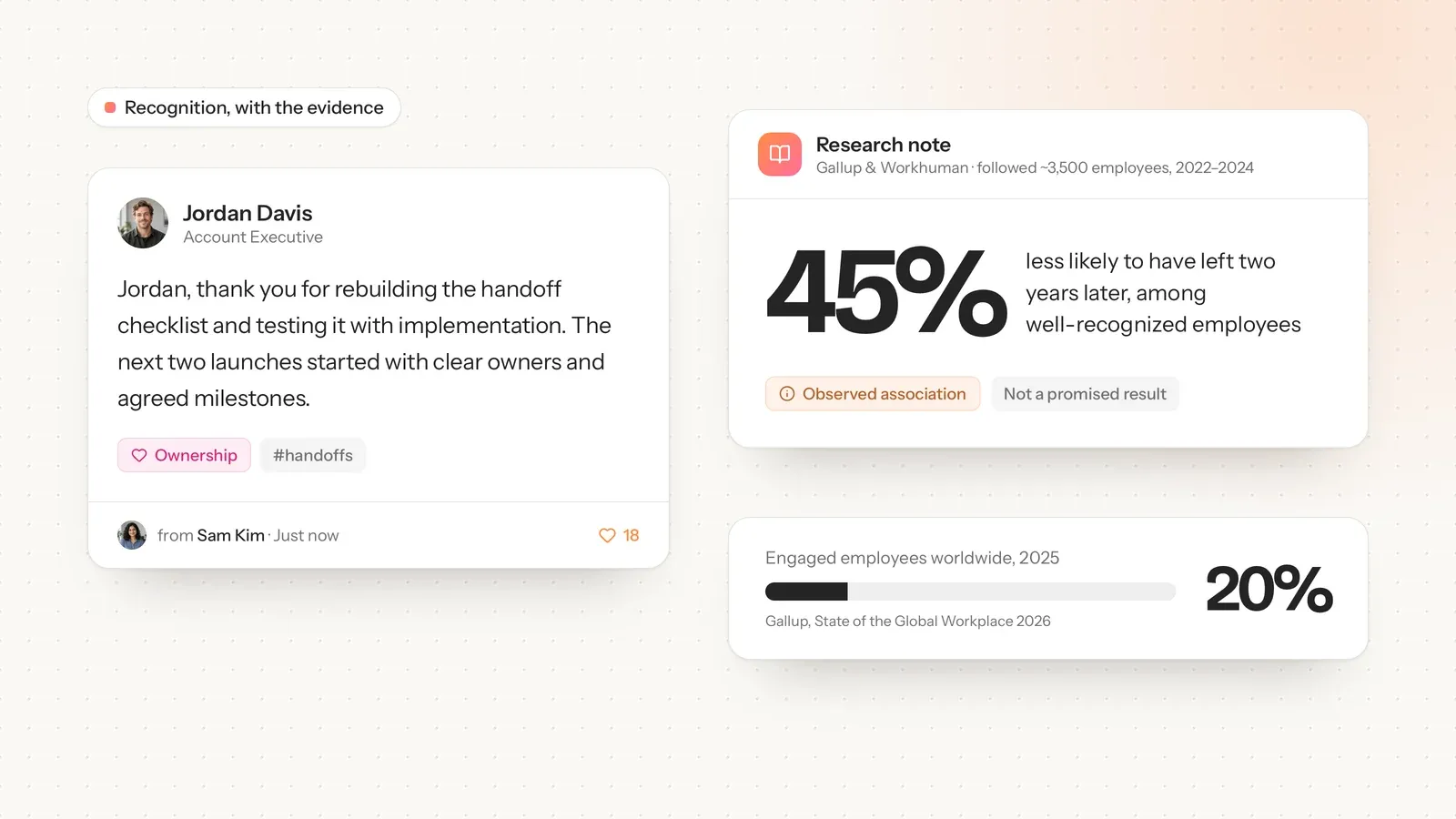
Recognition is the acknowledgment: naming what someone did, why it mattered, and connecting it to your values. It's primarily emotional and social.
Rewards are the tangible thing: a bonus, gift, experience, or point that can be redeemed. It's primarily material.
Both matter. But they work best when you understand what each one is actually for.
What Recognition Does Best
Recognition speaks to the human need to be seen and to belong. Done well, it:
- Reinforces the specific behaviors and values you want repeated
- Strengthens relationships between peers and with managers
- Builds a visible culture where great work is celebrated
- Costs little and can happen many times a week
Ask recipients what feels meaningful to them. Neither a message nor a material reward has the same effect for every person.
What Rewards Do Best
Rewards add weight and memorability to moments that deserve it. They:
- Mark significant milestones (anniversaries, major wins, ramp completion)
- Provide tangible proof of appreciation for outsized contributions
- Create anticipation and a sense of occasion
- Can be tailored to what an individual genuinely values
The caution: if rewards become the whole program, recognition turns into a transaction. People start asking "what do I get?" instead of feeling appreciated. Explain the contribution alongside the reward, and evaluate whether recipients find the combination useful.
How to Combine Them Well
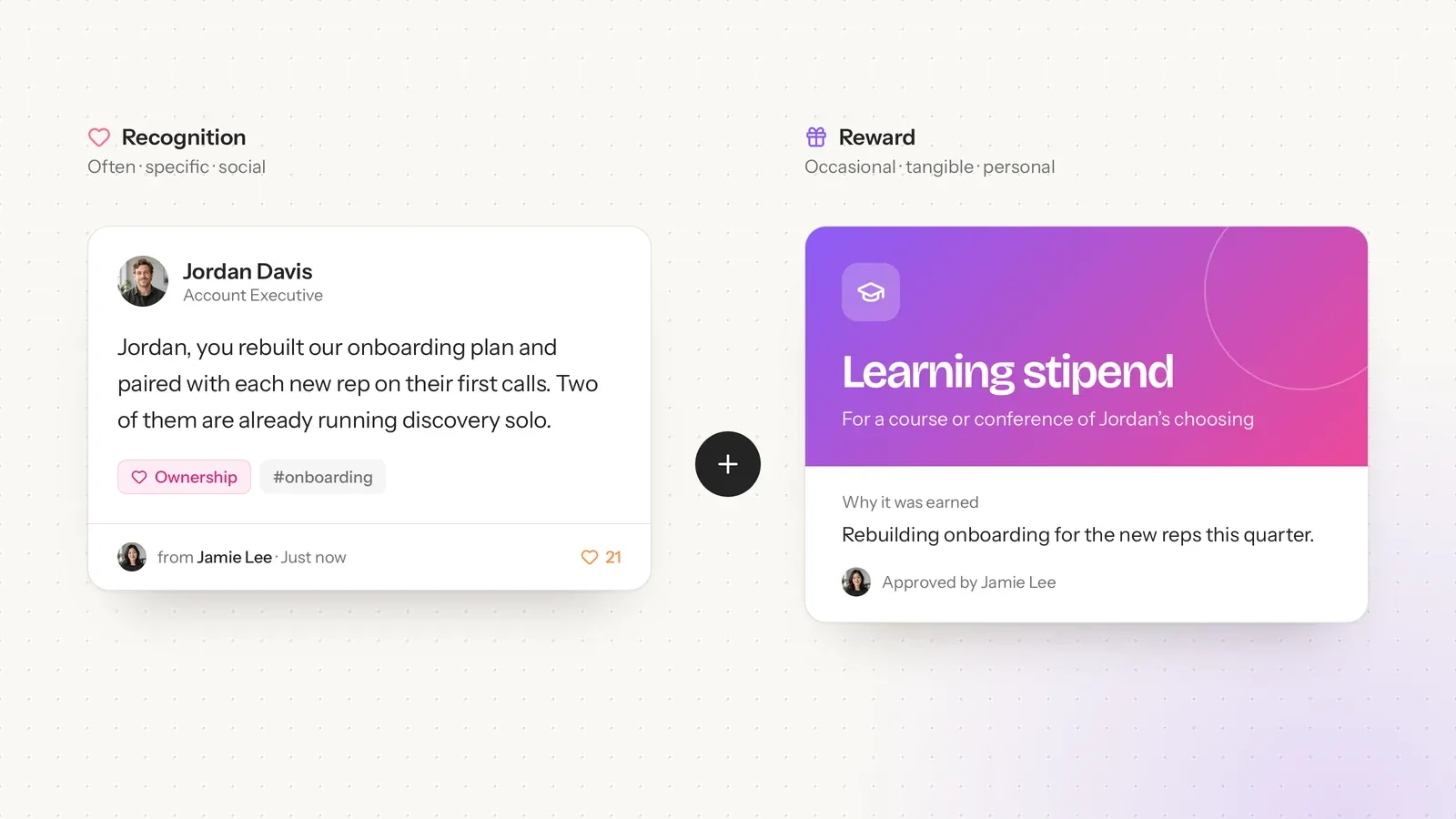
The strongest programs lead with recognition and use rewards to punctuate:
Recognize often, reward meaningfully. Make recognition a weekly habit; reserve tangible rewards for milestones and standout impact.
Always attach the "why." Even a reward should come with specific words about what earned it, or it loses its meaning.
Personalize. Some people love public praise; others prefer a private note or a practical reward. Offer options.
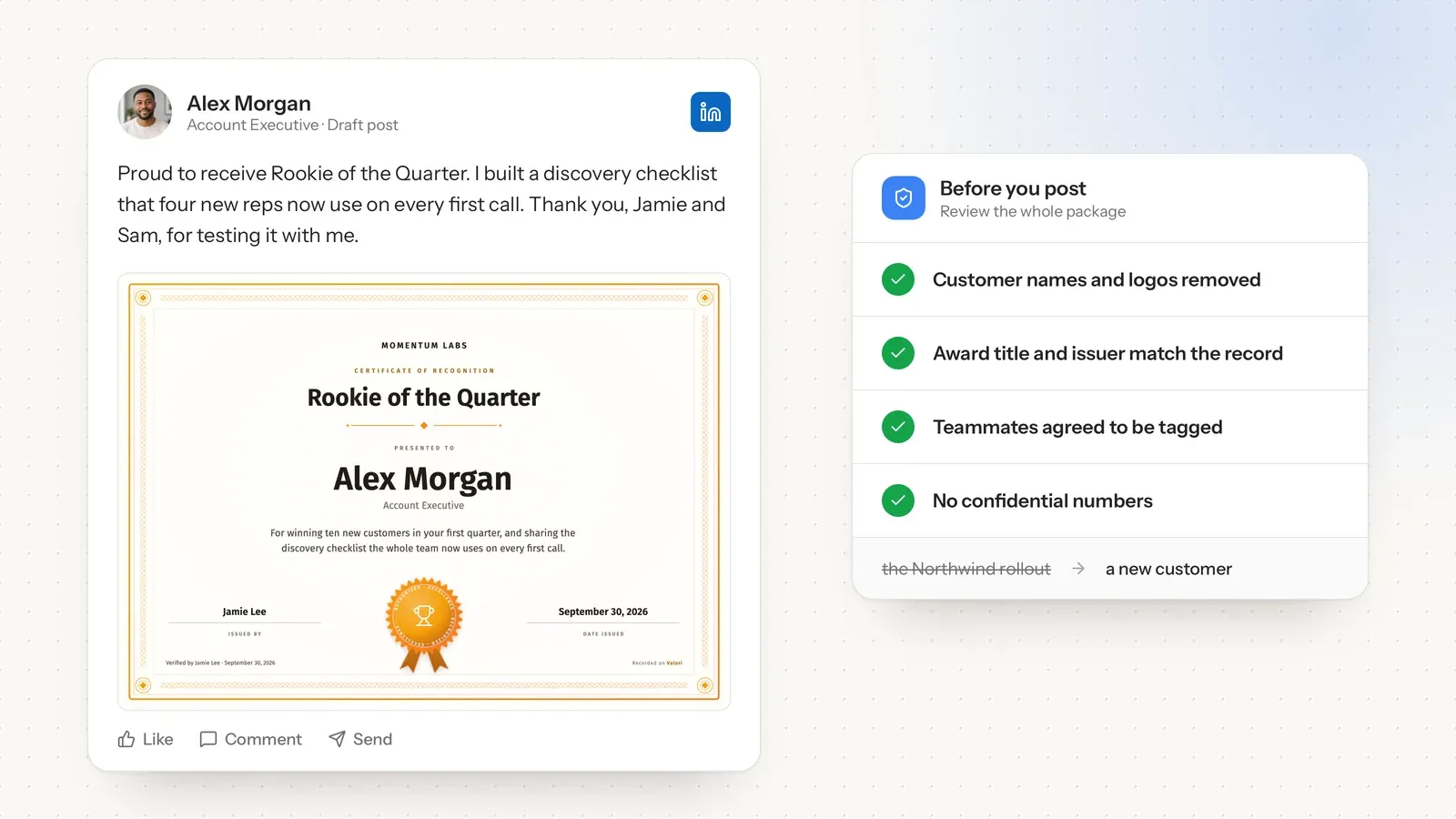
Keep the record clear. Managers or administrators can issue formal awards with certificates. Employees can select earned evidence for a portfolio story, with its actual verification status. Everyday recognition does not automatically become a certificate. Review permission and confidential details before sharing externally.
The Bottom Line
Recognition and rewards aren't competitors — they're partners. Recognition is the daily engine of a healthy culture; rewards are the occasional accelerant for moments that matter.
Get the balance wrong and you either have a program nobody feels (all rewards, no meaning) or one that never quite lands (occasional praise, no weight). Get it right — frequent, specific recognition punctuated by meaningful rewards — and you have a clearer basis for discussing what appreciation means on your team.